


Japanese brocade (kinran) is a woven textile with raised patterns created using metallic gold or silver threads alongside colored silk or cotton yarns. Unlike printed fabrics, the patterns in brocade are woven directly into the structure of the cloth using jacquard loom technology perfected over centuries. The finest Japanese brocades originate from Kyoto’s Nishijin district, where the nishijin-ori weaving tradition has been practiced for over 1,200 years. These textiles are traditionally used for formal kimono, obi belts, and ceremonial garments, but contemporary crafters also use them for bags, cushion covers, and decorative projects.
19 products found
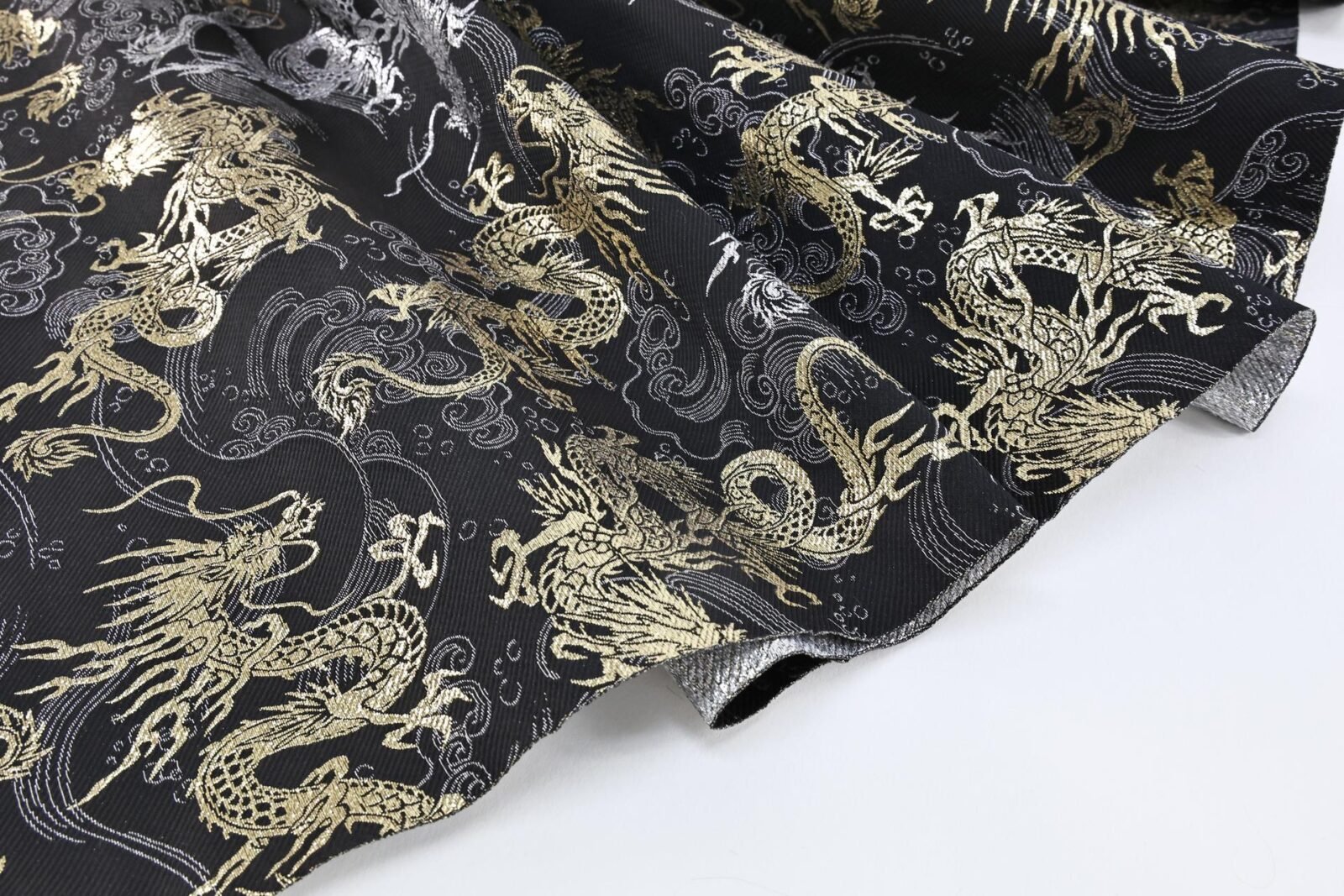
What is Japanese Brocade?
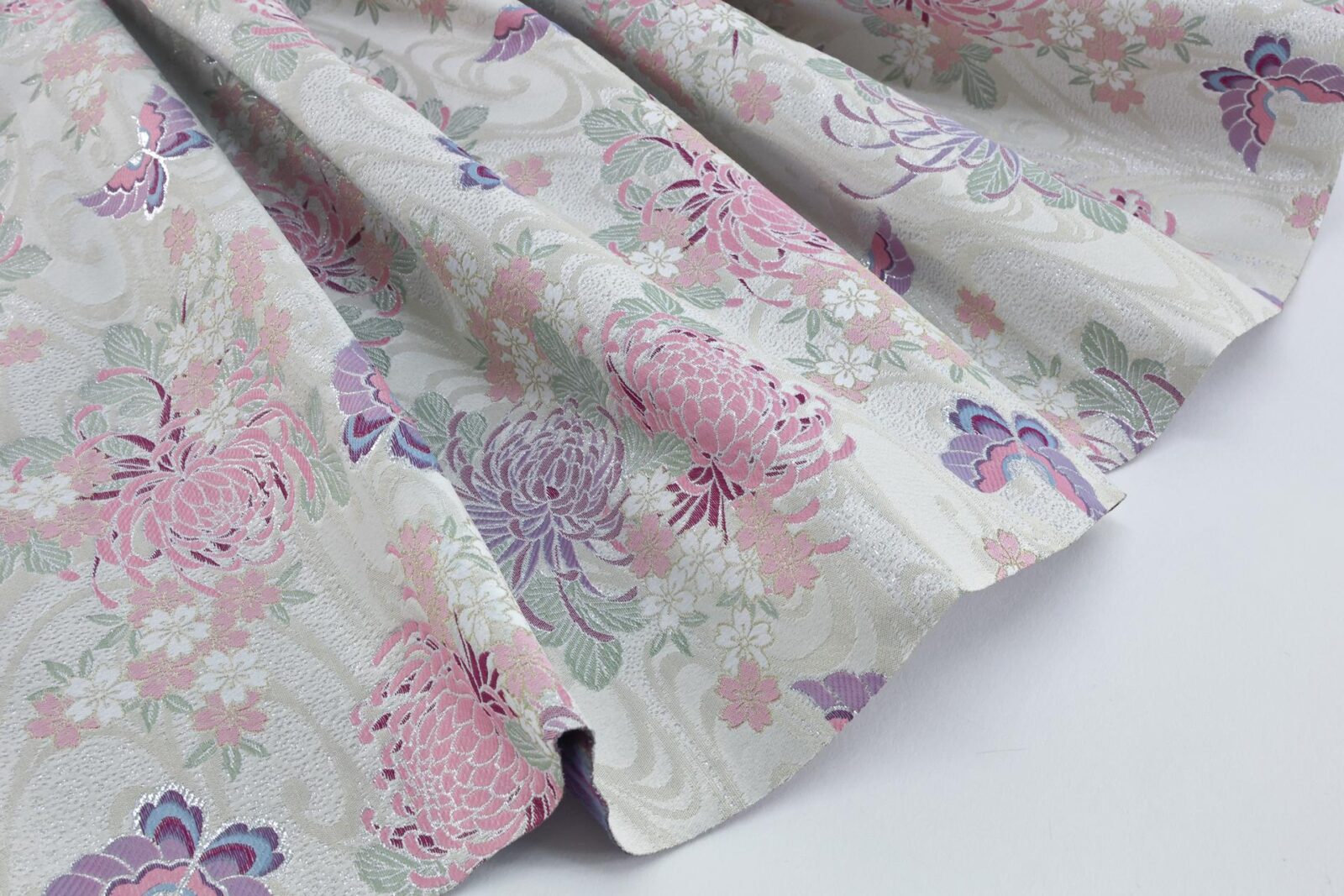
Japanese Brocade vs European Brocade
While European brocade often features bold floral damask patterns in heavy silk, Japanese brocade reflects a distinct aesthetic sensibility. Motifs tend toward nature – cranes (tsuru), chrysanthemums (kiku), dragons, ocean waves, and cherry blossoms – rendered with refined color harmonies rather than high contrast. The weaving techniques differ too: nishijin-ori uses distinctive methods like kinran (gold thread weaving) and ginran (silver thread) that give Japanese brocade its characteristic shimmer. Our collection includes both traditional ceremonial-weight brocades and lighter polyester jacquards suitable for everyday sewing projects.
Find out more about Brocade fabrics
Here are some answers to questions you may have about this product category and our shop.
What is the difference between brocade and jacquard?
Jacquard refers to the loom technology that creates complex woven patterns. Brocade is a type of fabric made on a jacquard loom, characterized by raised patterns woven with metallic or colored threads. All brocade is jacquard-woven, but not all jacquard fabric is brocade. Our Japanese brocades use traditional jacquard weaving techniques perfected in Kyoto’s Nishijin district.
What can I make with Japanese brocade fabric?
Japanese brocade is versatile and traditionally used for obi belts, formal kimono, and ceremonial garments. Modern crafters use it for evening bags, cushion covers, book covers, wall hangings, and statement garments. The heavier jacquard weaves work well for structured items, while lighter silk brocades drape beautifully for clothing.
How do I care for brocade fabric?
Most brocade fabrics should be dry-cleaned or hand-washed in cold water with a gentle detergent. Avoid wringing or twisting. Lay flat to dry and press on the reverse side with a cool iron. Silk brocades are particularly delicate and should always be dry-cleaned. Polyester brocades are more forgiving and can usually be machine-washed on a gentle cycle.
What is nishijin-ori brocade?
Nishijin-ori is a prestigious textile weaving tradition from the Nishijin district of Kyoto, dating back over 1,200 years. It encompasses several weaving techniques including kinran (gold brocade) and ginran (silver brocade). Nishijin-ori brocades are among the finest in the world, used for high-end kimono and obi. Several of our jacquard brocades use techniques inspired by this tradition.
Is brocade fabric suitable for beginners?
Brocade can be more challenging than plain cotton because the raised patterns require careful cutting and matching. However, simpler projects like cushion covers, book covers, or small pouches are perfectly achievable for beginners. Start with a polyester brocade, which is more forgiving than silk, and use sharp scissors to get clean cuts through the woven patterns.
What makes Japanese brocade different from Chinese or European brocade?
Japanese brocade reflects a distinct aesthetic tradition. While Chinese brocades often feature bold, symmetrical dragons and phoenixes, and European brocades favor floral damask patterns, Japanese brocade tends toward more subtle, nature-inspired motifs – waves, chrysanthemums, cranes – with refined color harmonies. The Nishijin weaving tradition also uses distinctive techniques like kinran (gold thread weaving) that give Japanese brocades their characteristic shimmer.
