


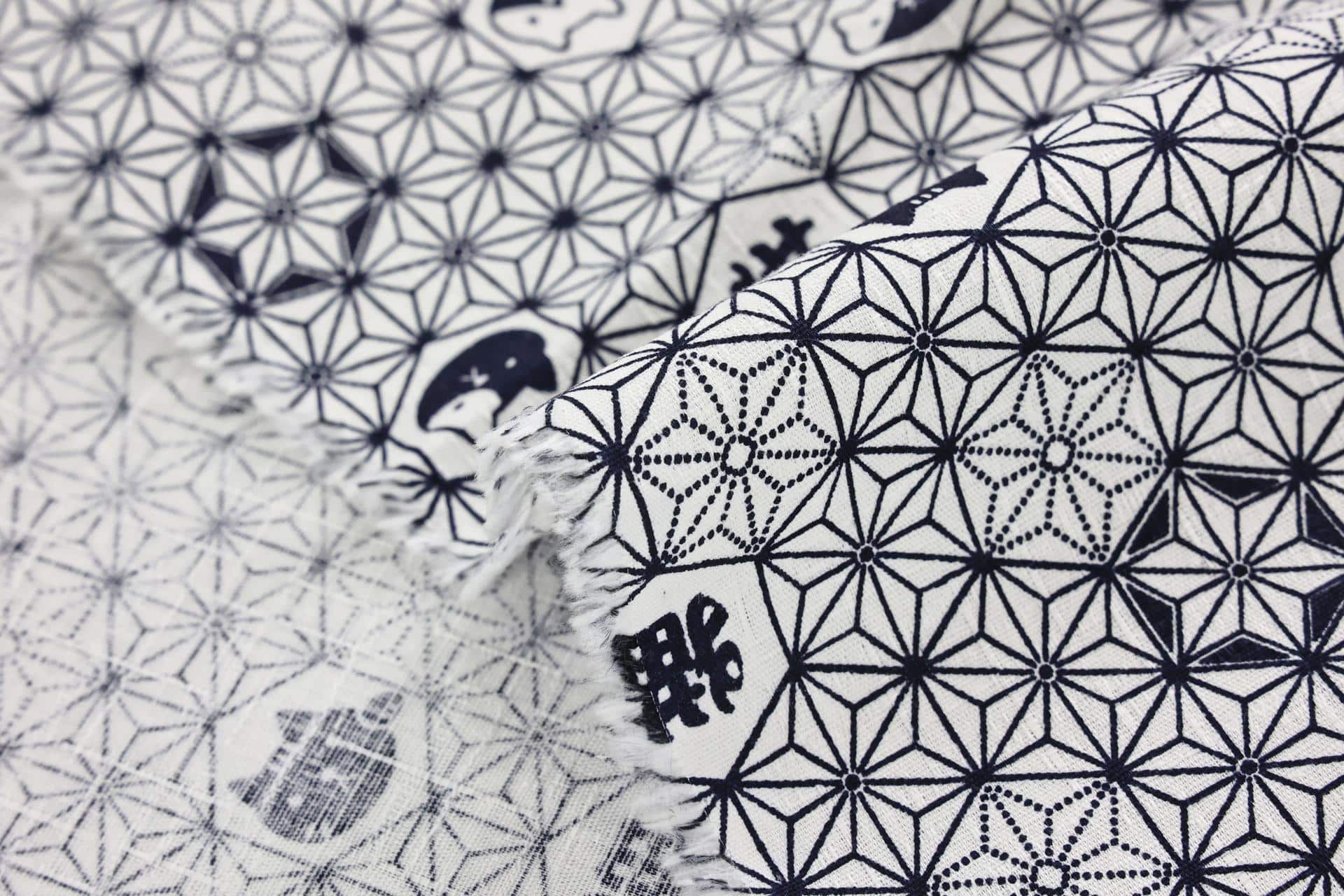
Asanoha (麻の葉), the “hemp leaf” pattern, is one of the most recognizable designs on traditional Japanese fabrics. This six-pointed star motif has appeared in Japanese textiles for over 1,200 years. Originally carved into Buddhist statues, it became a fashion sensation in the Edo period when kabuki actors wore it on stage. Japanese parents traditionally use asanoha on baby clothes because hemp grows fast and strong, symbolizing their wishes for their child’s healthy development. Today, asanoha reached global recognition through Nezuko’s pink kimono in Demon Slayer. For sewers working with Japanese fabrics, it’s an ideal beginner-friendly pattern: non-directional, forgiving to cut, and easy to match at seams.
Key Takeaways
Before diving into the details, here’s what you need to know:
- The pattern itself: Asanoha (麻の葉) is a six-pointed star pattern representing stylized hemp leaves, one of the most iconic designs on traditional Japanese fabrics
- Its origins: Over 1,200 years old, first appearing on Buddhist statues before becoming a fashion sensation through Edo-period kabuki theater
- Why it matters: Represents rapid healthy growth, spiritual protection, and good fortune — traditionally used on baby clothes to wish children strength like the fast-growing hemp plant
- Pop culture moment: Nezuko’s pink kimono in Demon Slayer introduced asanoha to millions worldwide
- For sewers: Beginner-friendly pattern — non-directional, forgiving to cut, easy to match at seams
- Best fabric choices: Quilting cotton (110-120 gsm) for patchwork, double gauze for baby items, canvas for structured bags
- Starter projects: Japanese knot bags, furoshiki wrapping cloths, envelope-back cushion covers
What is the asanoha pattern?
Anyone who’s watched Demon Slayer, has already seen asanoha hundreds of times without knowing its name. That distinctive pink and white geometric pattern covering Nezuko Kamado’s kimono? That’s asanoha, one of the most beloved designs in the world of Japanese fabrics.
The word comes from Japanese: 麻 (asa) meaning hemp, の (no) meaning “of”, and 葉 (ha) meaning leaf. So asanoha literally translates to “hemp leaf”. Look closely at the pattern and you’ll see why. Each motif resembles a stylized hemp leaf, created by six diamond shapes radiating from a central point to form a star-like hexagon.
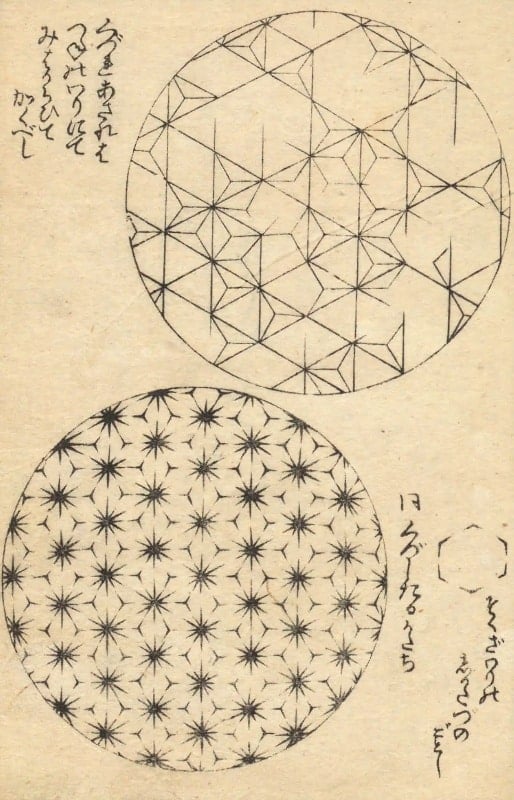
What makes asanoha fascinating is the gap between its humble origins and its profound cultural significance. Hemp was the everyday fiber of common people in Japan for centuries, long before cotton arrived from China. Yet this simple plant inspired one of the most beloved and symbolically rich patterns in Japanese textile history.
Here in Kyoto, I see asanoha everywhere. On tenugui towels in traditional shops. On furoshiki wrapping cloths. On the tiny cotton caps that shrine visitors buy for newborns. Last spring, I watched an elderly woman in a Teramachi shop spend ten minutes choosing between two nearly identical asanoha tenugui. When I asked what made the decision so difficult, she smiled and said one reminded her of her grandmother’s, the other of her daughter’s baby blanket. “Asanoha collects memories,” she told me. I’ve thought about that phrase ever since.
A pattern with 1,200 years of history
The earliest asanoha motifs appear not on fabric, but carved into wooden Buddhist statues from the Heian period (794-1185). Craftsmen used the interlocking hexagonal shapes as decorative backgrounds, likely drawn to the pattern’s mathematical harmony and visual balance.
During the Kamakura period (1185-1333), woodworkers developed kumiko, the intricate lattice technique still used today in shoji screens and traditional furniture. Asanoha became one of the foundational kumiko patterns, its geometry perfectly suited to the precise joinery required.
But the real turning point came in the Edo period (1603-1868), and it happened on stage. A kabuki actor named Iwai Hanshirō V, famous for playing female roles (onnagata), wore an asanoha-patterned costume in a popular performance. The audience went wild for it. Within months, asanoha fabric was the must-have textile in Edo, the city we now call Tokyo.
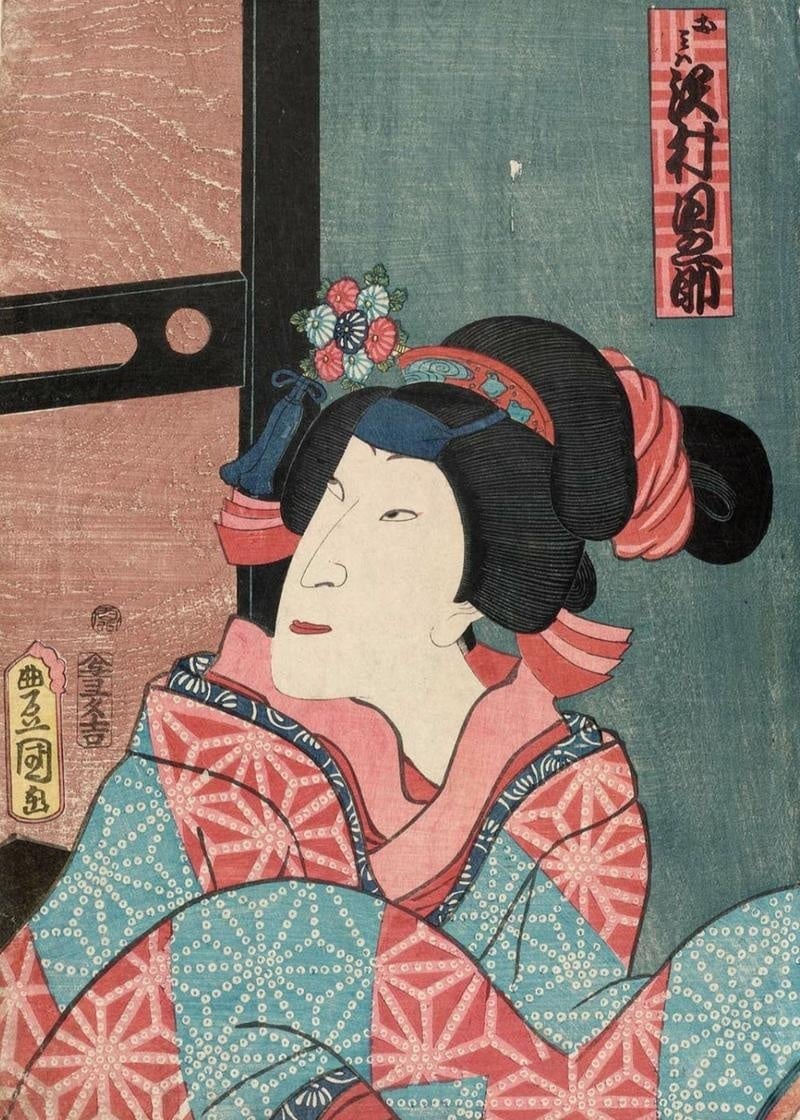
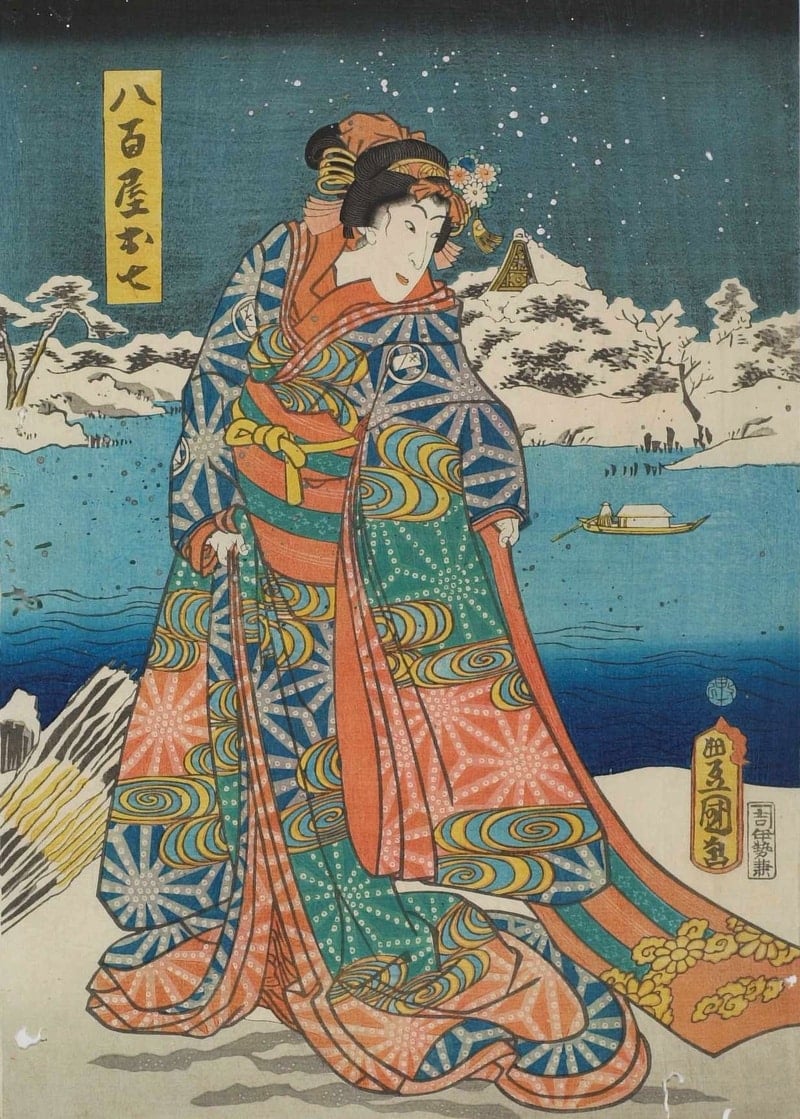
This wasn’t unusual for the era. Kabuki actors were the celebrities of their time, and fashion trends often started on the kabuki stage. What’s remarkable is that asanoha’s popularity never faded. It became permanently woven into Japanese textile culture.
By the mid-Edo period, asanoha had found its most enduring application: baby clothes. The pattern appeared on ubugi (産着), the first garments a newborn would wear. Parents dressed their children in asanoha hoping the symbolism of the hemp plant would transfer to their child.
| Period | Development |
|---|---|
| Heian (794-1185) | First appears on Buddhist statue decorations |
| Kamakura (1185-1333) | Adopted in kumiko woodworking |
| Edo (1603-1868) | Kabuki actor sparks fashion craze |
| Edo (continued) | Becomes standard for newborn clothing |
| 2020s | Global recognition through Demon Slayer |
The symbolism behind the hemp leaf
Why hemp, of all plants? And why would Japanese parents want their babies wrapped in a pattern representing it?
Hemp’s rapid growth explains this choice. This plant shoots up remarkably fast, reaching about four meters in just four months. It grows straight, grows strong, and requires minimal care. For parents in pre-modern Japan, these qualities represented everything they hoped for their children: rapid healthy growth, resilience, and the strength to thrive even in difficult conditions.
There’s more to the symbolism than just the plant itself. Look at the pattern’s structure. Each asanoha motif is built from triangles, and in Japanese folk belief, triangles possess protective power against evil spirits. The pattern essentially stacks protective triangles together, amplifying their spiritual shield.
Hemp also holds sacred status in Shinto, Japan’s indigenous spiritual tradition. Shrine priests use hemp fibers in shimenawa, the sacred ropes that mark the boundary between the mundane and the divine. The plant appears in purification rituals and was once worn by emperors during coronation ceremonies.
In the formal classification of Japanese patterns, asanoha belongs to kisshōmonyō (吉祥文様), meaning “auspicious omen patterns”. These designs are believed to bring good fortune, chosen deliberately for important life moments: births, weddings, New Year celebrations.
What asanoha symbolizes:
- Rapid, healthy growth (like the hemp plant)
- Protection against evil spirits (triangular geometry)
- Spiritual purity (Shinto sacred associations)
- Good fortune and auspicious beginnings
Something worth knowing: unlike cherry blossom or autumn leaf patterns that belong to specific seasons, asanoha has no seasonal association. You can use Japanese fabrics with this pattern any time of year.
Asanoha variations you’ll encounter
The basic asanoha structure allows for creative interpretation, and Japanese textile artists have developed several recognized variations over the centuries.
Yabure asanoha (破れ麻の葉)
The most common version is actually called yabure asanoha, meaning “broken hemp leaf”. This might sound like a flaw, but it’s simply the standard continuous repeat where the pattern tiles seamlessly in all directions. When you buy typical Japanese fabrics with asanoha, you’re most likely getting yabure asanoha.
Rokkaku asanoha (六角麻の葉)
This variation emphasizes the hexagonal structure more prominently, sometimes with the hexagon outlines visible as a secondary design element. Rokkaku asanoha appears frequently in kumiko woodwork where the joinery naturally highlights the hexagonal framework.
Shibori asanoha (絞り麻の葉)
When asanoha combines with shibori dyeing techniques, the results can be striking. This classic indigo asanoha on white layers the geometric hemp leaf over the organic, irregular marks of tie-dye. The contrast between precise geometry and controlled randomness gives these Japanese fabrics a depth that solid-ground prints can’t match.
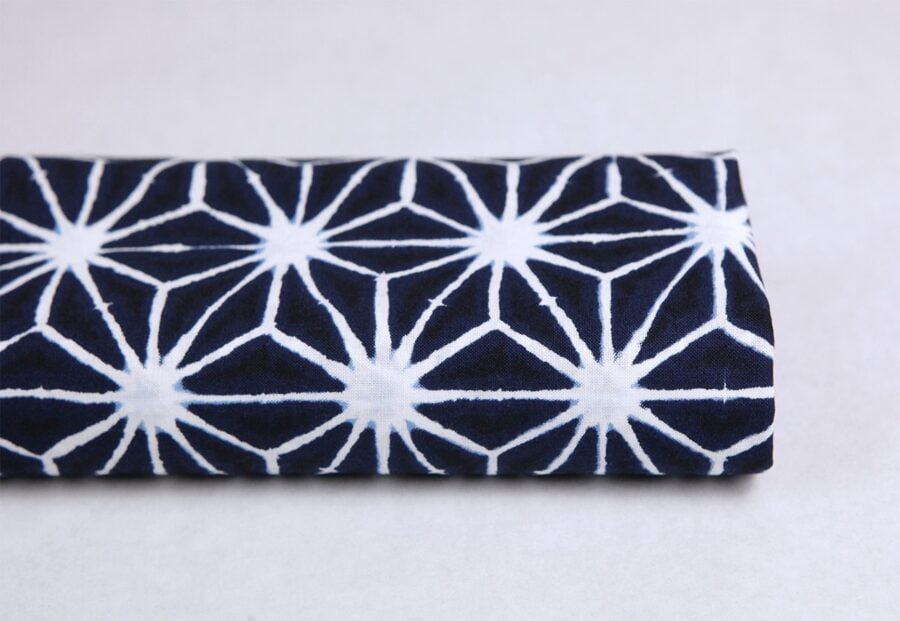
Asanoha Shibori indigo fabric blue background 1M
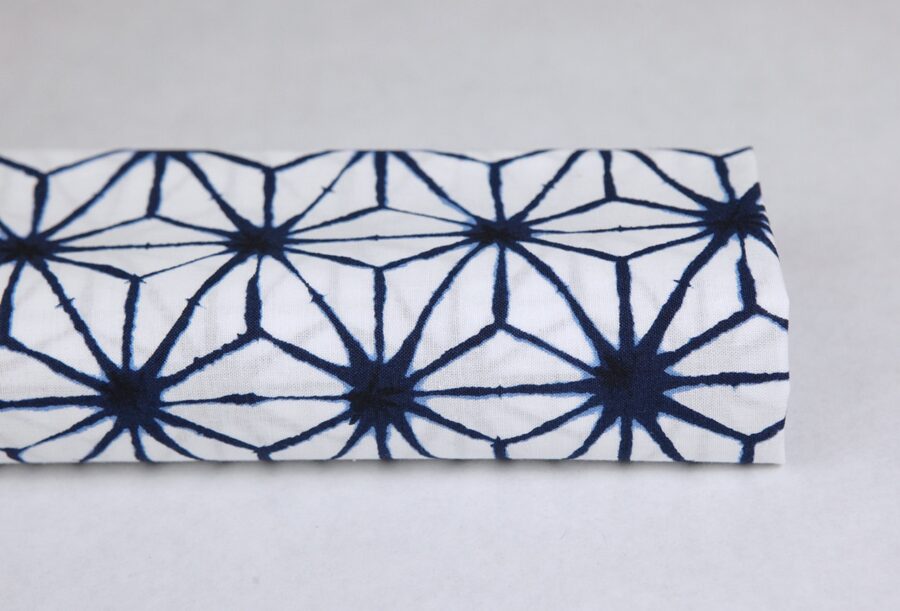
Asanoha Shibori indigo fabric white background 1M
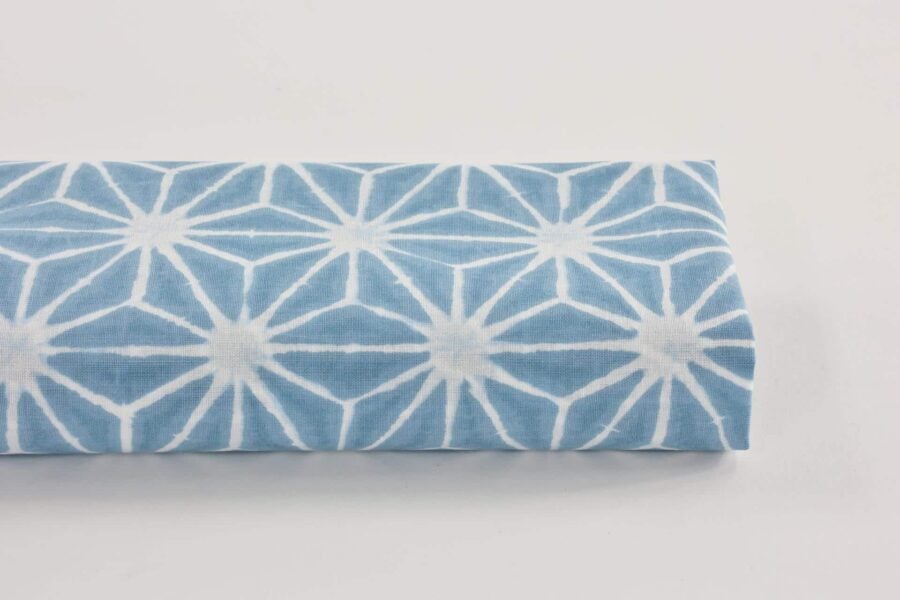
Asanoha Shibori white fabric blue background 1M
Scale variations
You’ll also encounter asanoha at different scales. Large-scale prints make bold statement pieces for home decor, while tiny, delicate asanoha works beautifully for garments and accessories where you want the pattern to read as texture from a distance.
Related geometric patterns
Asanoha shares its geometric DNA with other traditional patterns found on Japanese fabrics. Seigaiha (青海波), the overlapping wave pattern, uses similar principles of repetition and symmetry. Shippou (七宝), meaning “seven treasures”, creates interlocking circles that echo asanoha’s meditative quality. These patterns often work beautifully together in patchwork projects.
Choosing asanoha fabric for your projects
Selecting the right fabric weight and fiber content makes a real difference in your finished project. Here’s what I’ve learned from years of working with Japanese fabrics.
For quilting and patchwork, medium-weight cotton in the 110-120 gsm range hits the sweet spot. It’s stable enough to cut accurately, holds a crease for pressing seams, and layers nicely without becoming too bulky. A quilting-weight cotton like this Ecru multicolored Asanoha fabric navy black background is perfect for patchwork and small accessories.
If you’re making bags or pouches that need structure, look for dobby-weave cotton or canvas. These Japanese fabrics have more body and will hold their shape without requiring heavy interfacing.
For baby items, double gauze is the traditional choice. The two-layer construction creates softness and breathability that single-layer fabrics can’t match. Perfect for swaddle blankets, bibs, and burp cloths.
| Fabric type | Weight | Best for |
|---|---|---|
| Quilting cotton | Light-medium | Quilts, small pouches, patchwork |
| Dobby cotton | Medium | Bags, cushion covers, aprons |
| Canvas | Medium-heavy | Sturdy bags, upholstery |
| Double gauze | Light | Baby items, scarves, summer garments |
| Cotton lawn | Light | Garments, linings |
A note on quality: Japanese-made fabrics generally have tighter weaves, more accurate pattern registration, and better colorfastness than cheaper imports. Look for fabrics from established Japanese mills like Sevenberry, Cosmo, or Kokka. Browse the full Asanoha Fabrics collection to find your ideal weight and colorway.
Beginner-friendly sewing projects with asanoha
One of the best things about asanoha for new sewers: it’s incredibly forgiving. The pattern is non-directional, so you don’t need to worry about cutting all your pieces facing the same way. And the busy geometric repeat hides small imperfections far better than solid fabrics would.
Here are three projects perfect for getting started with Japanese fabrics.
Japanese knot bag
This elegant bag uses two handles of different lengths that slip through each other to close. It’s simpler than it looks and makes a stunning gift. We’ve put together a step-by-step knot bag tutorial if you want to try it with asanoha fabric. You’ll need about half a meter of fabric for each side if you want to make it reversible.
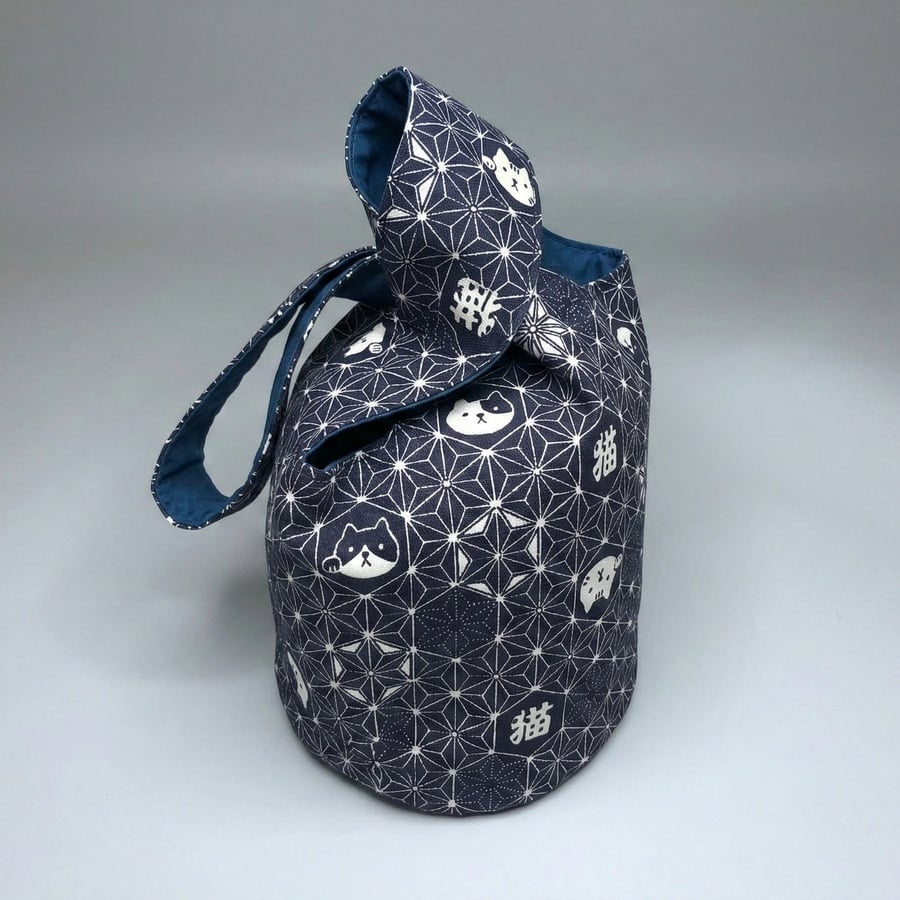
Furoshiki wrapping cloth
The simplest project of all: hem a square of fabric (70cm or 100cm) and you’re done. Use it for wrapping gifts, carrying your lunch, or as a decorative cloth. A handmade furoshiki from quality Japanese fabrics feels completely different from a store-bought one. There are dozens of folding techniques to explore once you have your basic square.
Cushion covers
Envelope-back cushion covers require no zippers and minimal sewing skills. Cut one front panel and two overlapping back panels, hem the overlap edges, sew the perimeter, turn right side out. Asanoha cushions on your sofa instantly add a Japanese aesthetic to any room.
For your first few projects, I’d suggest avoiding garments. Clothing introduces fitting challenges and requires pattern matching at prominent seams. Build your confidence with accessories and home goods first.
Asanoha in modern Japanese life
Walk through any department store in Japan and you’ll find asanoha on everything from stationery to kitchen goods to smartphone cases. The pattern transcended its textile origins long ago.
In contemporary fashion, asanoha appears on everything from traditional yukata (summer kimono) to streetwear. Japanese brands frequently incorporate it into limited editions around New Year, leveraging its auspicious symbolism.
Home decor has embraced asanoha as part of the “Japandi” trend, that fusion of Japanese and Scandinavian minimalism that’s been popular for several years now. The pattern works surprisingly well in Nordic-inspired interiors. Its geometric regularity feels modern and clean, while its traditional origins add warmth and cultural depth.
And then there’s Demon Slayer. The anime’s global success introduced asanoha to millions of people who had never encountered traditional Japanese fabrics before. Nezuko’s pink asanoha kimono became so iconic that it sparked a genuine resurgence of interest in traditional wagara (和柄) patterns.
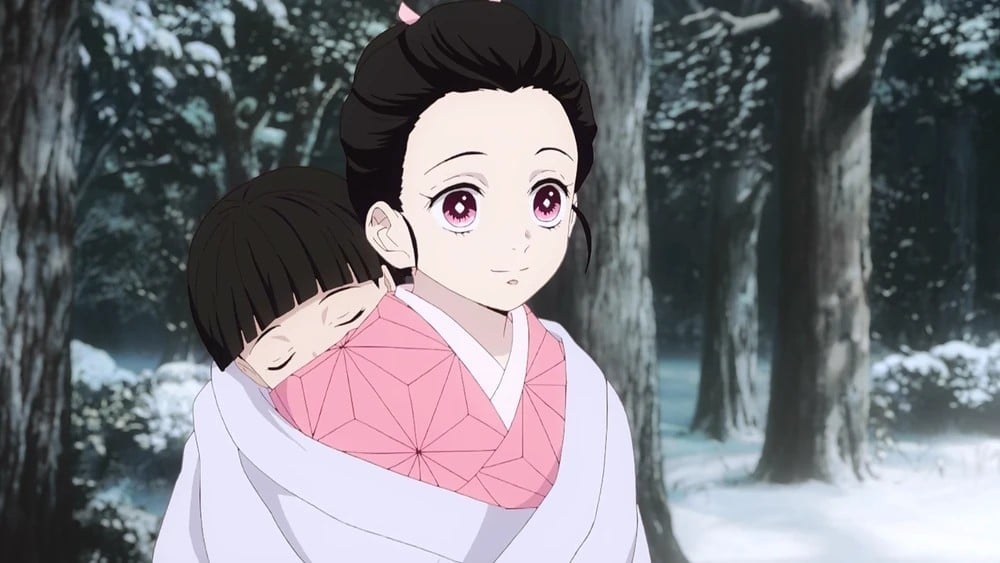
The owner of a small fabric shop on Osaka told me that after Demon Slayer took off, teenagers started coming in asking for “Nezuko fabric.” At first, she didn’t know what they meant. “Then I realized they wanted asanoha,” she said, laughing. “I’ve been selling it for forty years, and suddenly it has a new name.” She doesn’t mind. Whatever brings people to traditional patterns. Once they learn the real history, some of them come back for more.
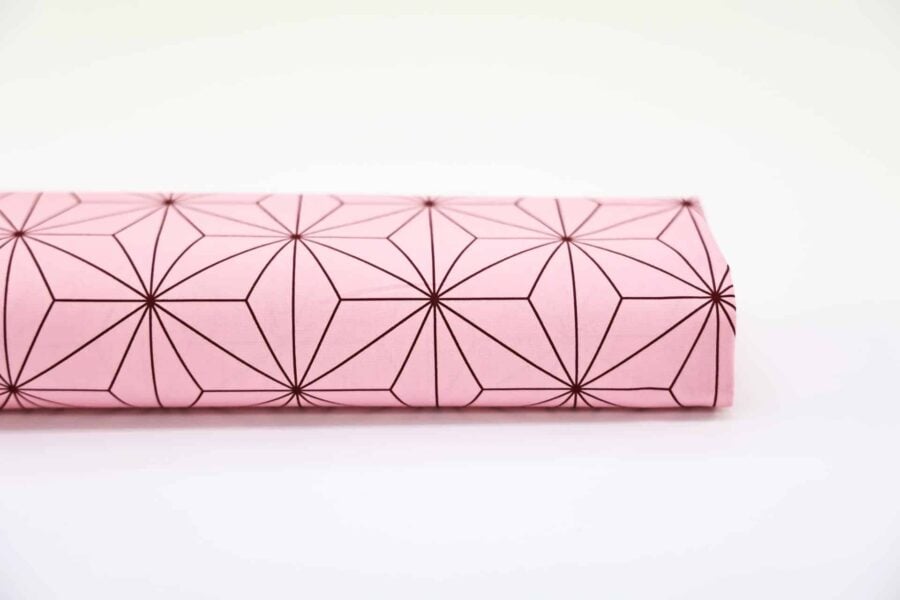
If you enjoy asanoha’s geometric appeal, the Japanese Geometric Pattern Fabrics category brings together similar traditional patterns: seigaiha waves, shippou circles, yagasuri arrows, and more. Each carries its own history and symbolism worth exploring.
Conclusion
Asanoha is one of those rare designs that has remained relevant for over a millennium. From Heian-era Buddhist statues to Nezuko’s viral pink kimono, the hemp leaf pattern keeps finding new audiences while staying true to its roots.
What makes it special isn’t just the geometry. It’s the layers of meaning woven into every repeat: a parent’s wish for their child to grow strong, a belief in spiritual protection, a connection to Japan’s sacred textile traditions. When you sew with asanoha, you’re working with a pattern that carries twelve centuries of cultural weight.
And yet, for all that history, asanoha remains wonderfully practical. Non-directional, forgiving to cut, easy to match at seams. Whether you’re making your first furoshiki or tackling a complex garment, this pattern will work with you, not against you.
If you’ve been hesitant to try Japanese fabrics, asanoha is the perfect place to start. Browse our authentic Japanese fabrics from Kyoto, pick a colorway that speaks to you, choose a simple project, and discover why this ancient pattern still captivates sewers around the world.