

A pair of old indigo work trousers, darned so many times the white stitches end up tracing constellations across the blue: that image sums up sashiko. Sashiko (刺し子) is a Japanese embroidery worked in running stitch, first meant to reinforce and repair the clothes of farming families in northern Japan. The word means “little stabs of the needle,” and that is the whole idea: a row of even stitches, repeated until it forms geometric patterns of an almost hypnotic regularity. What began as a gesture of necessity, white cotton thread on indigo cloth, became one of Japan’s most recognized textile crafts. Today sashiko is surging back, carried by the urge to repair rather than throw away. Behind its apparent simplicity, sashiko holds a thousand years of textile resourcefulness from the Japanese north, and it has never been easier to start.
Key points
Before we get into the details, here is what to keep in mind:
- The technique: sashiko (刺し子, “little stabs of the needle”) is a Japanese running-stitch embroidery, traditionally white thread on indigo fabric, both decorative and functional.
- Its origins: born in the Edo period (1603-1868) in the rural north (Tōhoku), to reinforce, patch, and warm garments made of scarce, costly cotton.
- Boro: textiles mended layer upon layer are called boro (襤褸); they embody mottainai, the Japanese spirit that refuses waste.
- The main stitch families: moyōzashi (patterns in continuous lines), hitomezashi (single stitches on a grid), and kogin (counted-thread diamonds).
- The motifs: asanoha, seigaiha, shippō, and kikkō each carry a meaning of protection, prosperity, or longevity.
- The supplies: a matte, low-twist cotton thread, a long rigid needle, a palm thimble, and a soft plain-weave cotton fabric, ideally indigo.
- Today: sashiko is enjoying its strongest revival in a century, driven by visible mending and sustainable fashion.
What is sashiko?
Sashiko is a Japanese embroidery built on a single gesture: the running stitch, the simplest stitch there is, where the needle passes over then under the fabric, leaving an even dotted trail. Repeated across parallel rows, that stitch gives rise to geometric patterns. Sashiko serves two purposes at once: it strengthens the cloth by layering thread, and it decorates it. This double nature, useful and beautiful, sits at the heart of its identity.
The most recognizable feature of sashiko is the contrast of white on blue. The ecru cotton thread stands out against indigo-dyed cloth, and that pairing is no aesthetic accident. When sashiko spread, cheap white cotton and plentiful indigo dye were what modest families had on hand. Beauty was born of constraint.
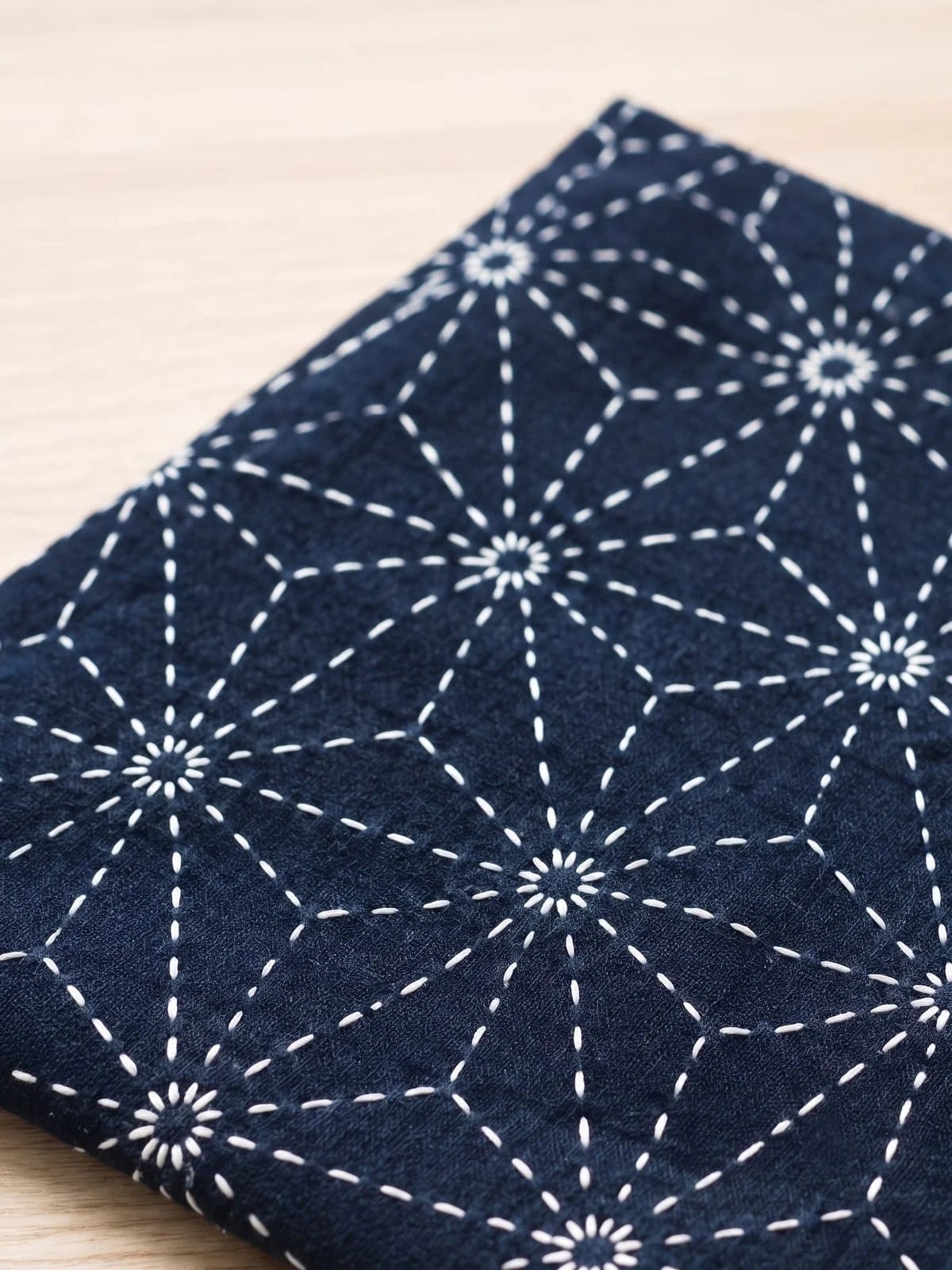
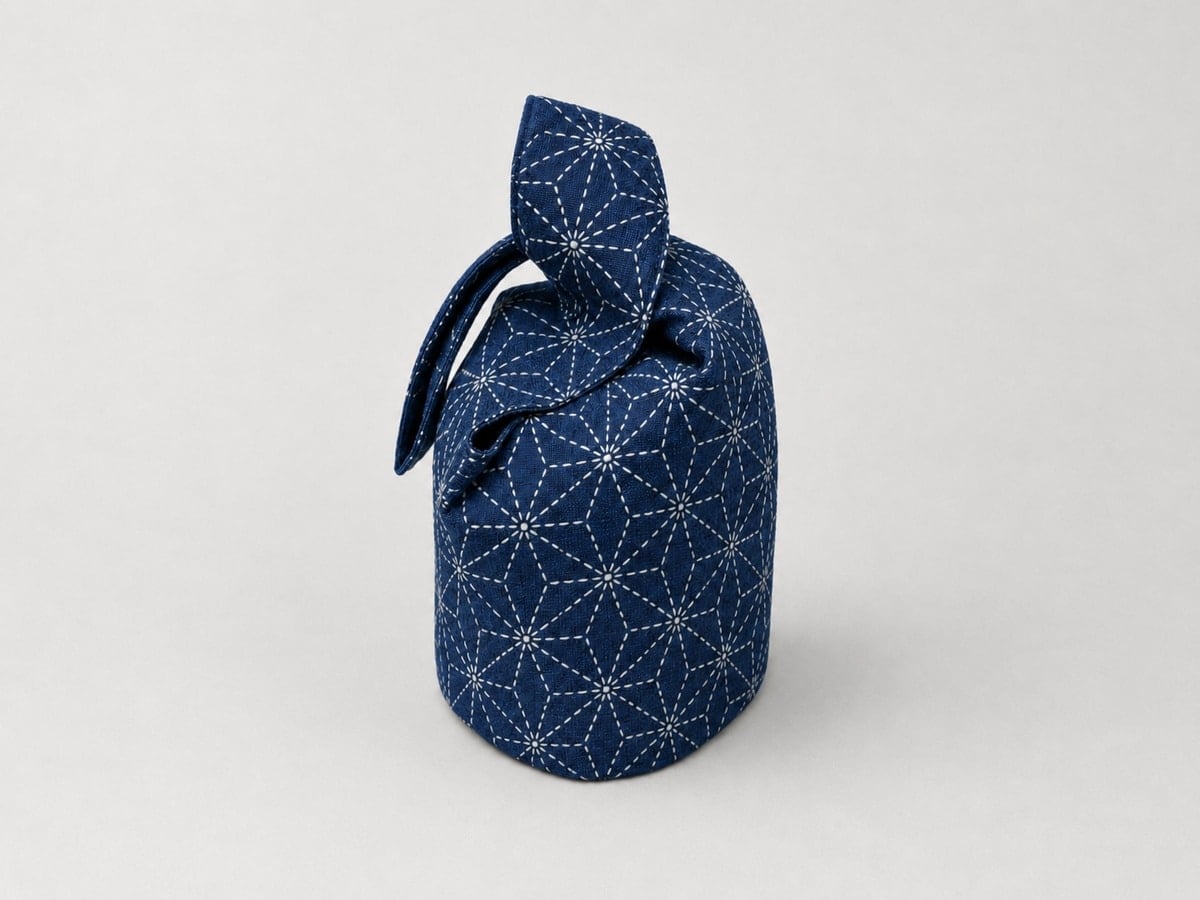
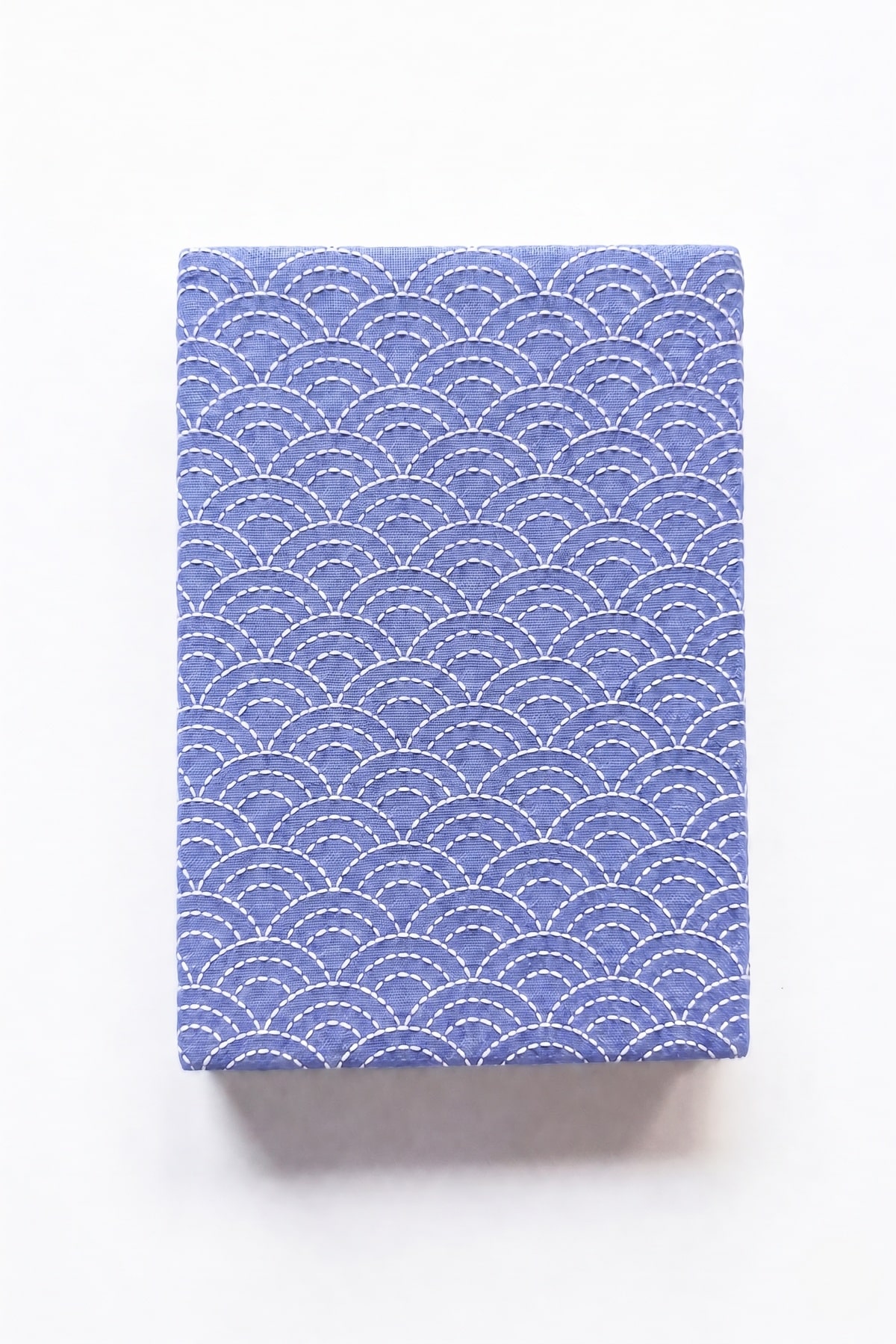
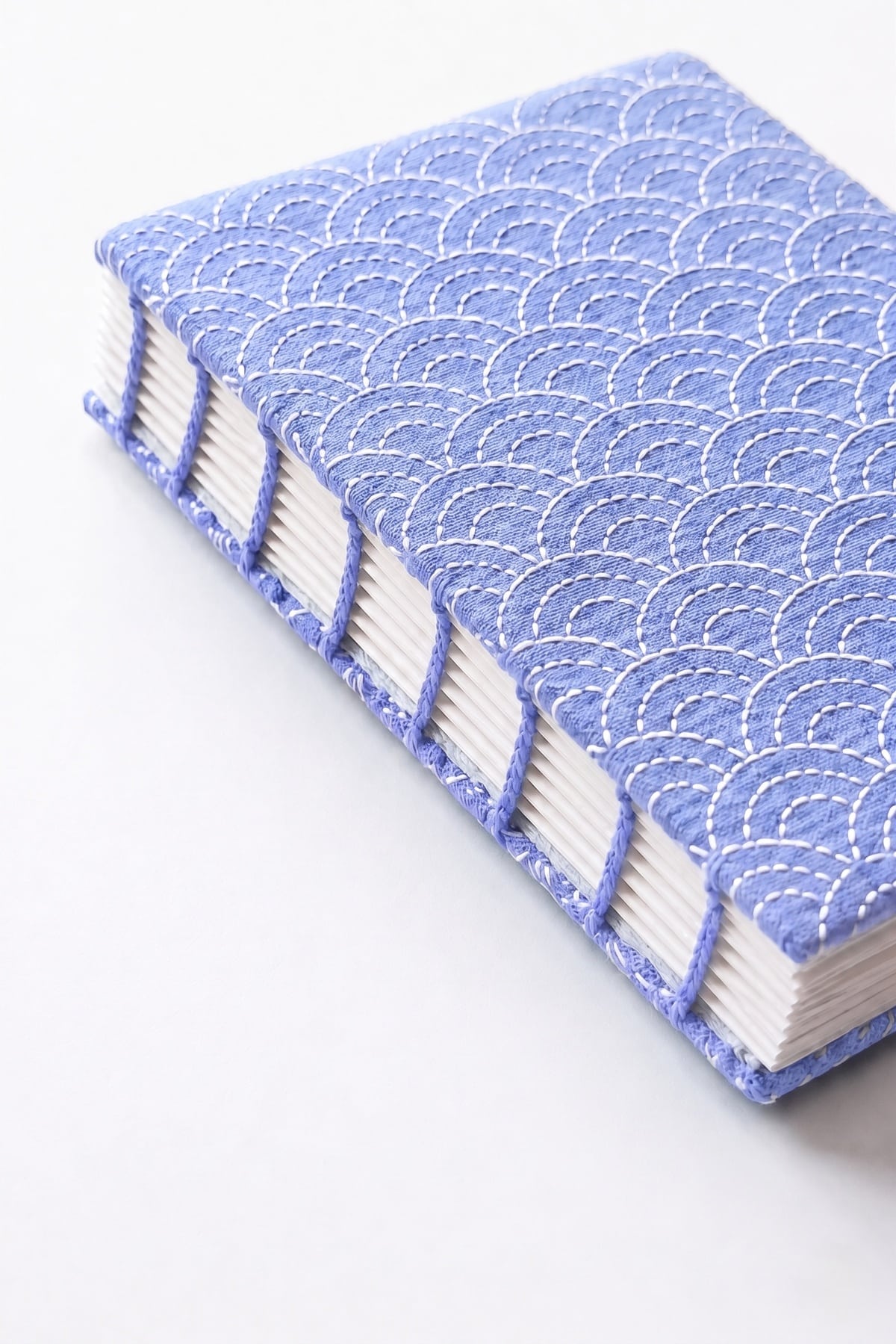
It helps to tell true stitched sashiko apart from fabric simply printed with a sashiko motif. The first is sewn stitch by stitch, by hand, which gives it a slightly quilted relief and a tactile presence. The second reproduces the look of the stitches through printing, on a ready-to-sew cotton. Both have their place: you embroider a cushion or a jacket pocket in real sashiko, and you sew a whole bag from a printed sashiko-motif fabric. On our Japanese sashiko-pattern fabric on a blue background, the stitches are printed directly on the cotton: it is a decorative fabric, made to be sewn, that mimics the look of finished sashiko without any embroidering. Handy for a bag or a pouch when you want the effect without the needlework, but it is not a base to embroider on.
What moves me most about sashiko is that it never tried to hide the repair. Where Western sewing long wanted to make darning invisible, sashiko exposes it, underlines it, turns it into a pattern. That very simple idea is winning over a whole generation of stitchers.
From Tōhoku winters: the origins of sashiko
Sashiko was born in the Edo period (1603-1868), in the cold, rural regions of northern Japan, especially Tōhoku. There, farming and fishing families faced harsh winters with very little. Cotton, which reached Japan toward the end of the 16th century, stayed expensive and would not grow in these northern regions with their too-harsh climate. Every scrap of cloth was worth its weight in gold and was never thrown away.
Sashiko answered concrete needs. By stabbing long rows of stitches through several layers of fabric, you got a thicker, warmer, sturdier textile. That reinforced the wear points of work clothes, quilted the layers to insulate against the cold, and held patches in place. The coats of Edo firefighters, the hikeshi banten, used this principle: layers of densely stitched cotton, able to hold the water they were soaked in before facing the flames.
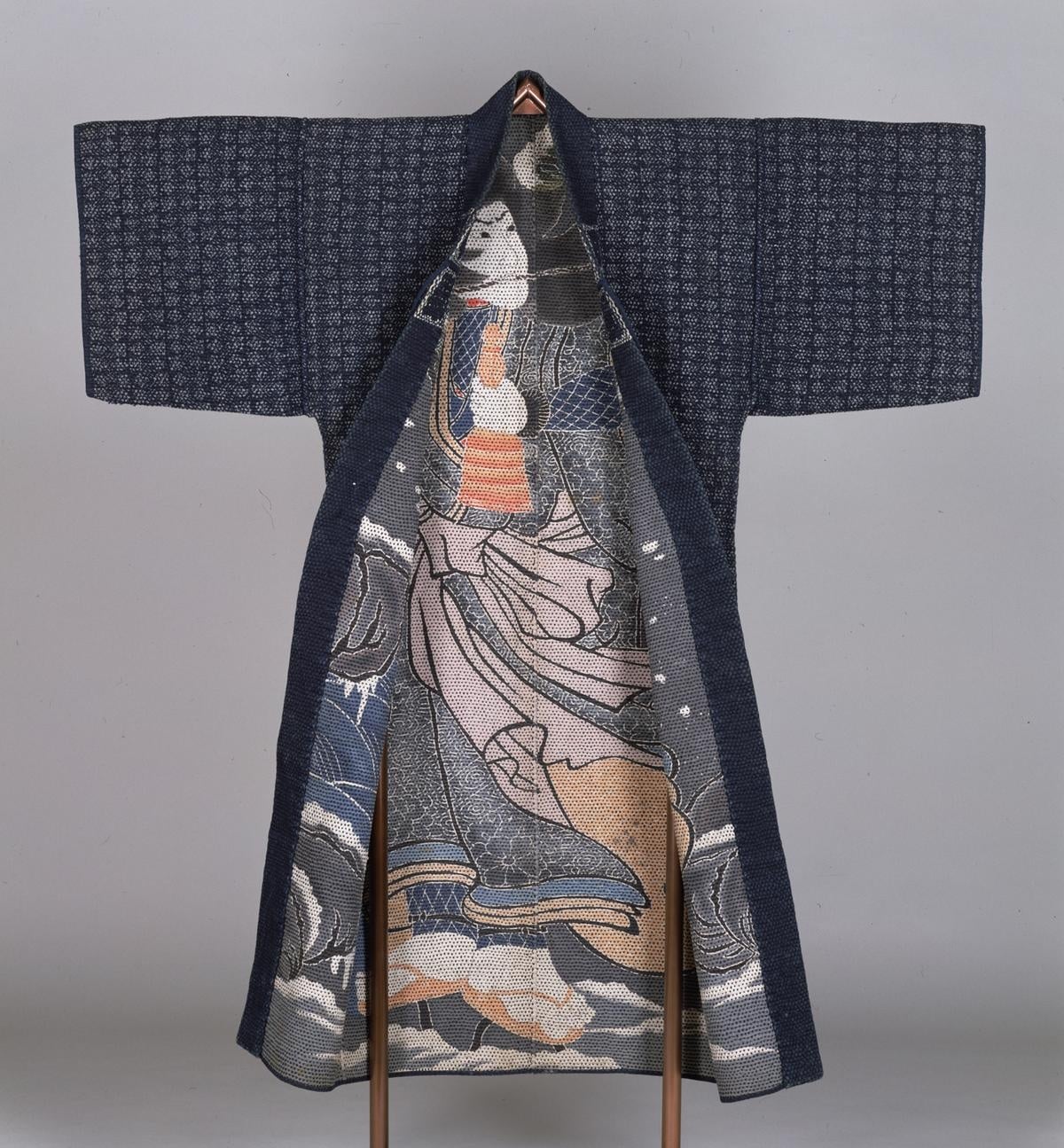
The famous white on indigo also comes down to a social reason. Under Edo rule, sumptuary laws strictly regulated dress: the common classes were not allowed silk, bright colors, or large patterns. Indigo, permitted and affordable, and ecru cotton thread became the palette imposed on the people. Sashiko flourished within those limits.
Boro and mottainai: repair rather than discard
When a garment had been darned, patched, and reinforced with sashiko for years, sometimes generations, it became a boro (襤褸), literally “rags.” A boro is not a single piece of cloth: it is an accumulation of indigo scraps sewn to one another, handed down and mended as long as they held. A boro jacket could pass from grandfather to father, then end up as a blanket, then a rag. Nothing was wasted.
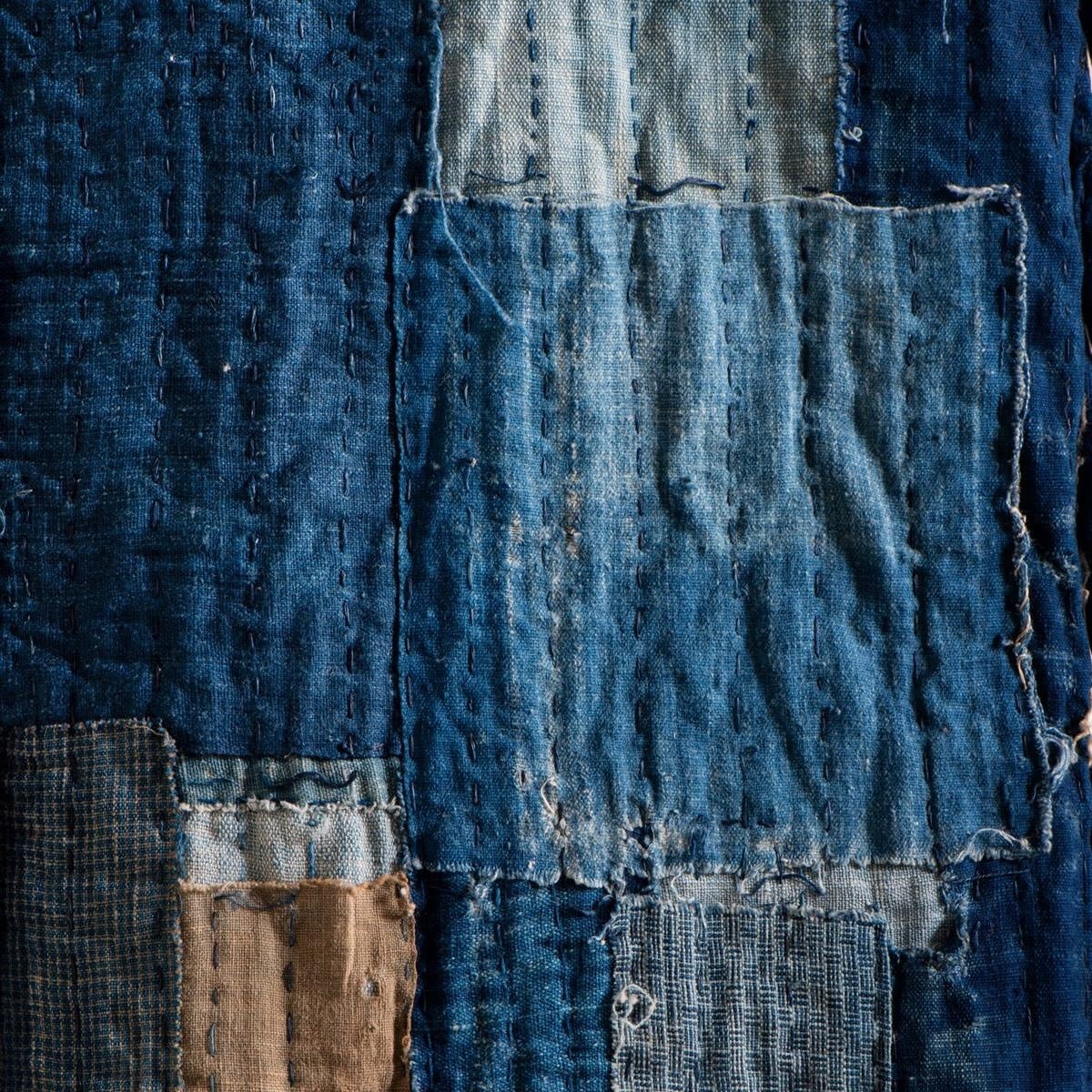
This philosophy has a name in Japan: mottainai (もったいない), that pang of regret at waste, the sense that a resource holds a value you have no right to squander. Sashiko and boro are its purest textile expression. For a long time these pieces were seen as markers of poverty, almost shameful. It took the 20th century, and the work of collectors like the ethnologist Chūzaburō Tanaka, for their cultural and aesthetic value to be recognized. His collection was long shown at the Amuse Museum in Tokyo, which closed in 2019. Today, museums around the world preserve boro as works of art in their own right.
Moyōzashi, hitomezashi, kogin: the main stitch families
Sashiko comes in three main stitch families, which share the same running stitch but organize it differently. Understanding them helps you choose your first technique and read any piece of sashiko.
Moyōzashi: patterns in continuous lines
Moyōzashi (模様刺し) is the most common and most approachable form. You follow lines drawn in advance to stitch long rows that trace patterns, often curved and flowing like waves or scales. The stitches never touch from one line to the next: each row lives its own life. It is the ideal technique to start with, because you simply follow a traced line without counting anything.
Hitomezashi: one stitch at a time on a grid
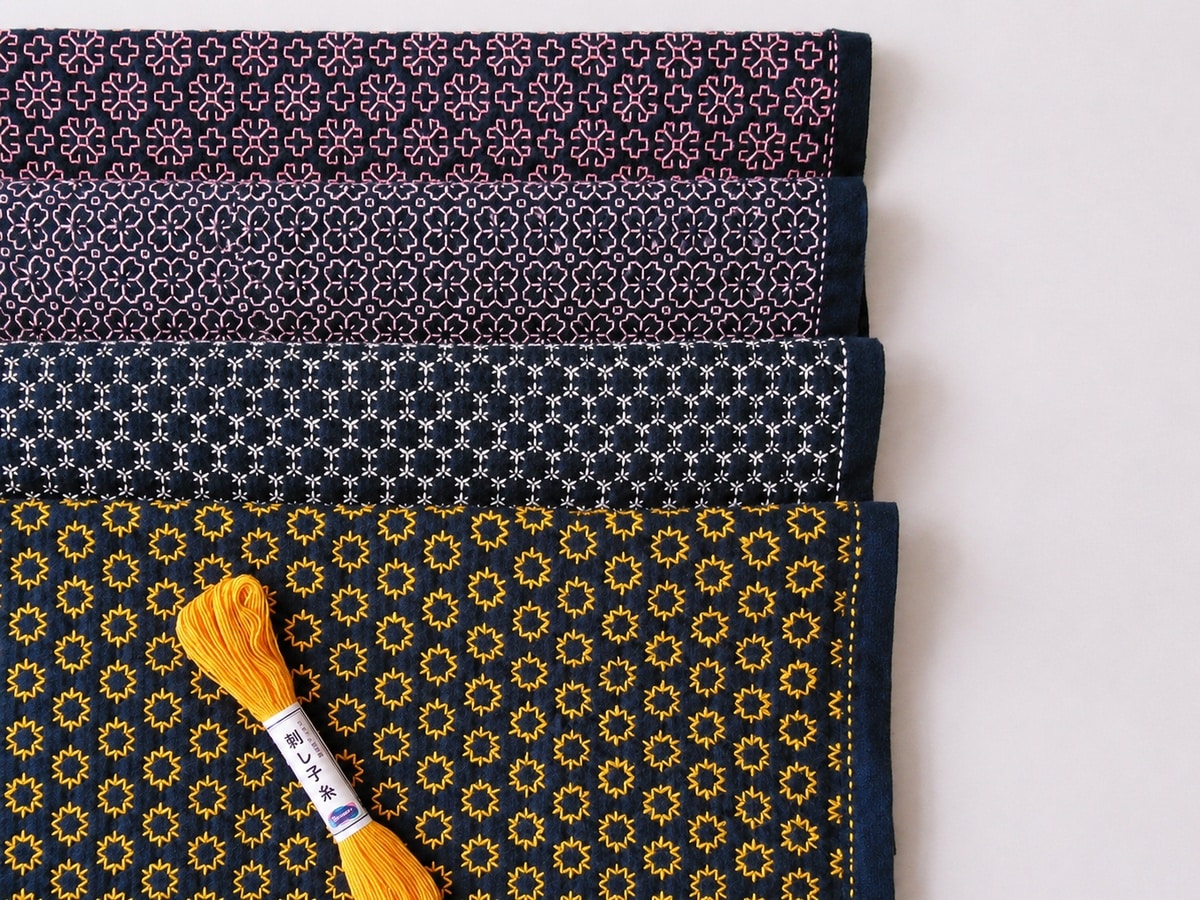
Hitomezashi (一目刺し) means “one single stitch.” Here the design arises from single stitches lined up on a grid, horizontally and vertically. Each stitch is the size of one cell of the grid you chose at the start, and it is the meeting of the crossing rows that makes the pattern appear, sometimes where you did not expect it. Hitomezashi has an almost mathematical, very satisfying quality, but it asks for a bit more rigor than moyōzashi.
Kogin: counting threads
Kogin (こぎん刺し) is a form of counted-thread embroidery: you pass the thread over and under an odd number of weft threads to form tight diamonds. The result is dense, graphic, almost woven. Kogin is counted thread by thread, which makes it more demanding. I will be honest: for a very first project, I would steer you away from it. Start with a moyōzashi on a pre-printed fabric, and you will come to kogin later, once the gesture has become second nature.
The three great regional sashiko
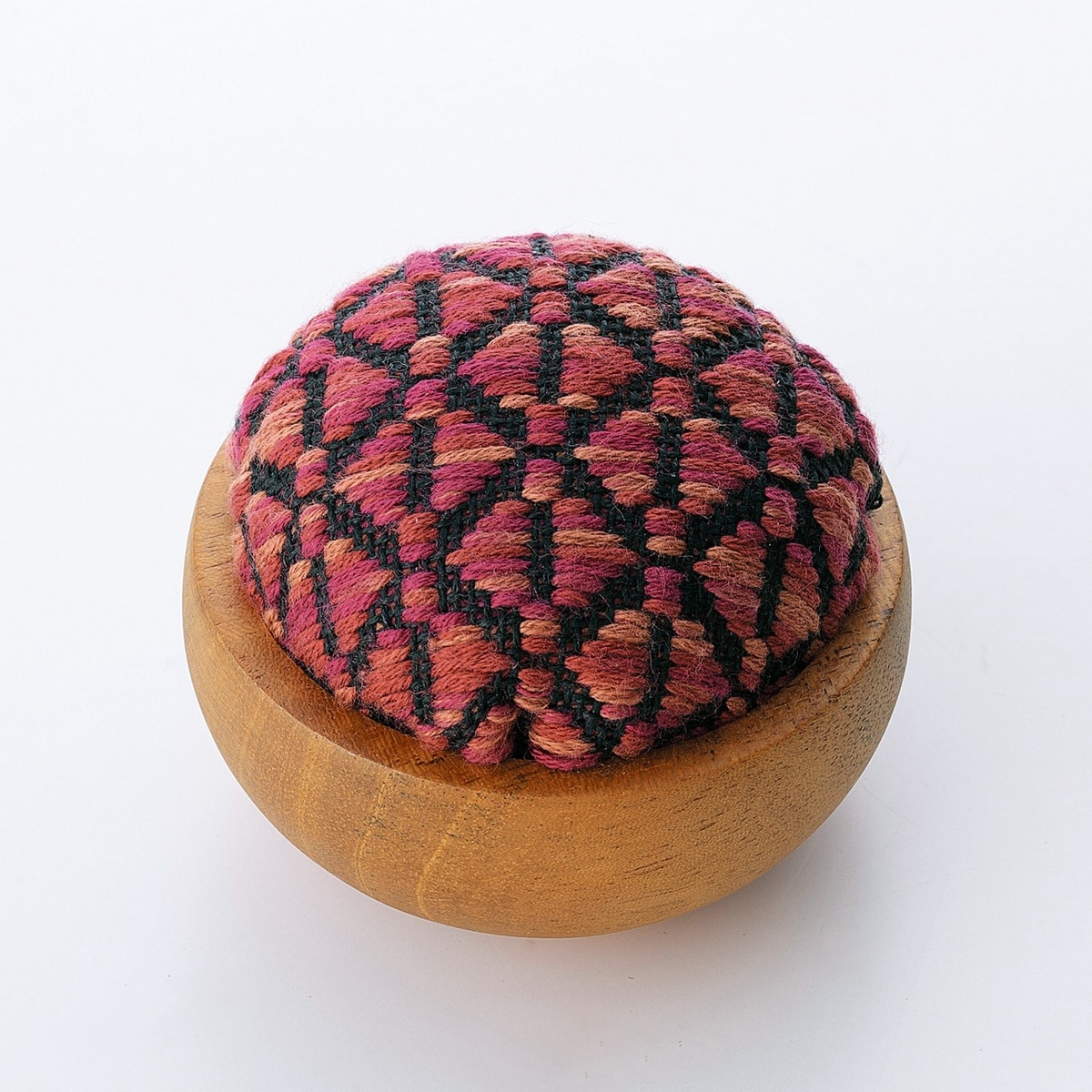
Tōhoku gave rise to three regional traditions sometimes grouped under the name of the “three great sashiko.” The first is the kogin-zashi of Tsugaru, in today’s Aomori Prefecture, recognizable by its white-thread diamonds on indigo. The second is the hishizashi of southern Aomori, also diamond-based but stitched with colored threads, which gives it a particular liveliness. The third is shōnai-zashi, in Yamagata Prefecture, where some artisans still stitch freehand, with no traced guide. Each of these traditions developed its own repertoire of motifs and its own way of counting, handed down from mother to daughter for generations.
Sashiko motifs and what they tell
Sashiko motifs are almost never mere decoration: they are wishes sewn into the cloth. Inherited from the great repertoire of traditional Japanese motifs, the wagara, each one carries a precise meaning that families chose deliberately.
The asanoha (麻の葉), the hemp leaf, is a six-pointed star that evokes fast growth and protection. Hemp grows straight and quickly, with no special care, and parents embroidered this motif on children’s clothes wishing they would grow just as vigorously. If this motif draws you in, I laid out its whole history in our complete guide to the asanoha pattern.
The seigaiha (青海波), the blue ocean waves, lines up overlapping concentric arcs like a calm swell. It symbolizes lasting peace and the steady flow of good fortune, generation after generation. Its even rhythm makes it one of the most soothing motifs to stitch. Here too, its journey, from the Heian court to today’s fabrics, is told in our guide to the seigaiha pattern.
Other motifs come up often in sashiko. The shippō (七宝), the “seven treasures,” weaves interlocking circles evoking prosperity and harmonious bonds. The kikkō (亀甲), the tortoise shell, lines up hexagons associated with longevity, since the tortoise is said to live ten thousand years. All these motifs share the same logic: a simple geometric grid, repeated endlessly, that becomes meditative under the needle.
To see this tradition come alive under a master’s hands, this short BBC profile follows the craftsman Atsushi Futatsuya, heir to a long line of sashiko practitioners, in his workshop.
Sashiko supplies: thread, needle, thimble, and fabric
Getting started in sashiko takes very little, and that is one of its great strengths. Four things are enough: thread, a needle, a thimble, and fabric. But each has its specifics, and choosing the right supplies changes everything about how comfortable the stitching feels.
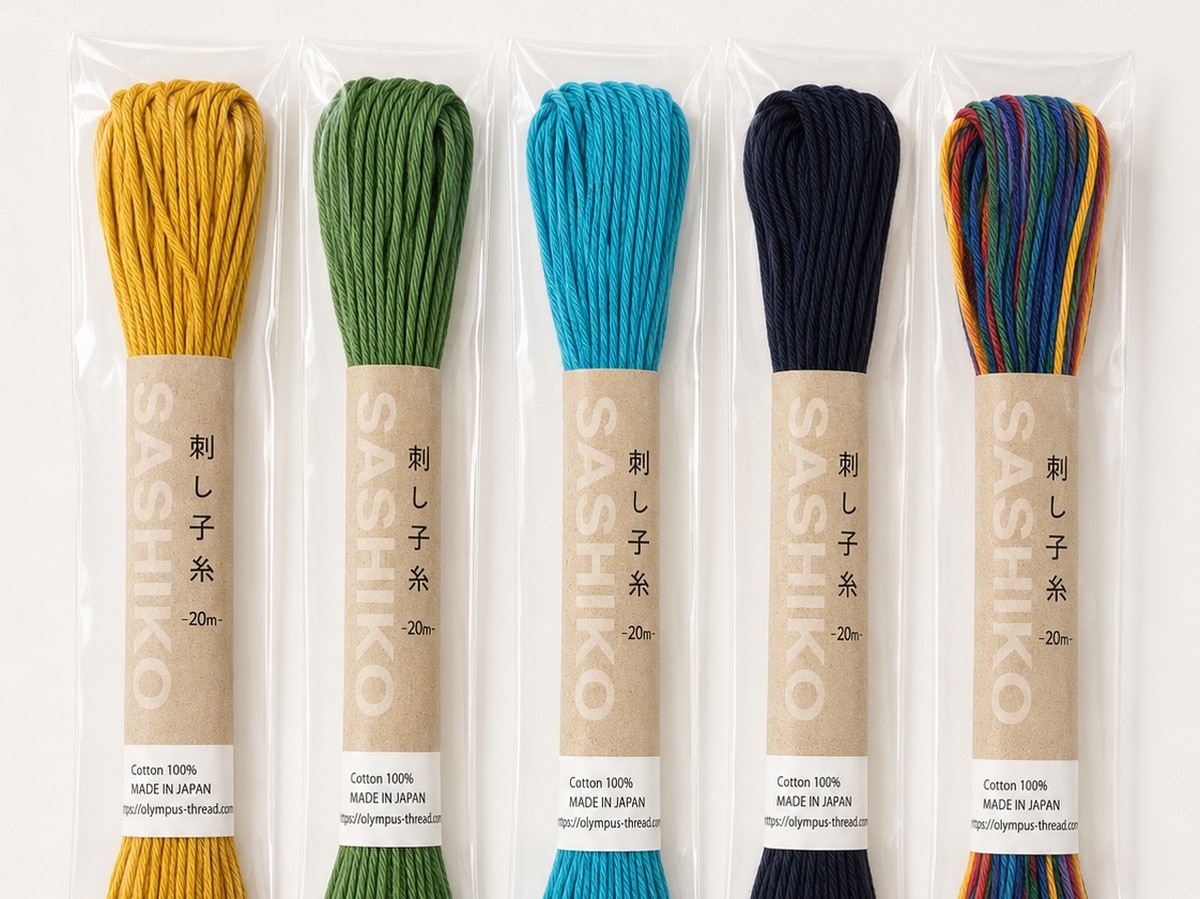
Sashiko thread is a matte, low-twist cotton, made of long fibers that make it strong while keeping a soft, slightly thick look. It comes in several weights and in skeins of varying lengths: a small skein is enough to practice, while a generous spool is better for a large project. Our 100-meter white sashiko thread stays the safe choice for white on indigo, while the 100-meter navy sashiko thread plays tone on tone, more discreet. For an accent stitch that pops, the red sashiko thread revives a very real tradition, that of the red thread embroidered on certain pieces. The whole palette, from quiet ecrus to vivid shades, lives in our sashiko embroidery thread category.
The sashiko needle is long, rigid, and sharply pointed. Its length is no detail: it lets you load several stitches at once before pulling the thread through, which speeds up the work and limits the passes through the fabric, and so the wear on the thread. The palm thimble, for its part, sits in the hollow of the hand rather than on the fingertip: it is with the palm that you push the long needle through the layers. The gesture throws you off at first, I admit, but once you have it, you will not go back. The needle and palm thimble round out the maker’s basic kit, alongside the thread and fabric.
On the fabric side, sashiko likes soft, plain-weave cottons, neither too tight nor too loose, that the needle slips through without forcing. Indigo-dyed cotton stays the choice most faithful to tradition: our hand-dyed solid indigo Japanese fabric offers exactly that deep blue ground on which white thread takes on its full force. If you would rather focus on the gesture without drawing your own motifs, a pre-printed sashiko fabric with the asanoha motif gives you the lines to follow, drawn directly on the cotton and meant to disappear under your stitches once the embroidery is done.
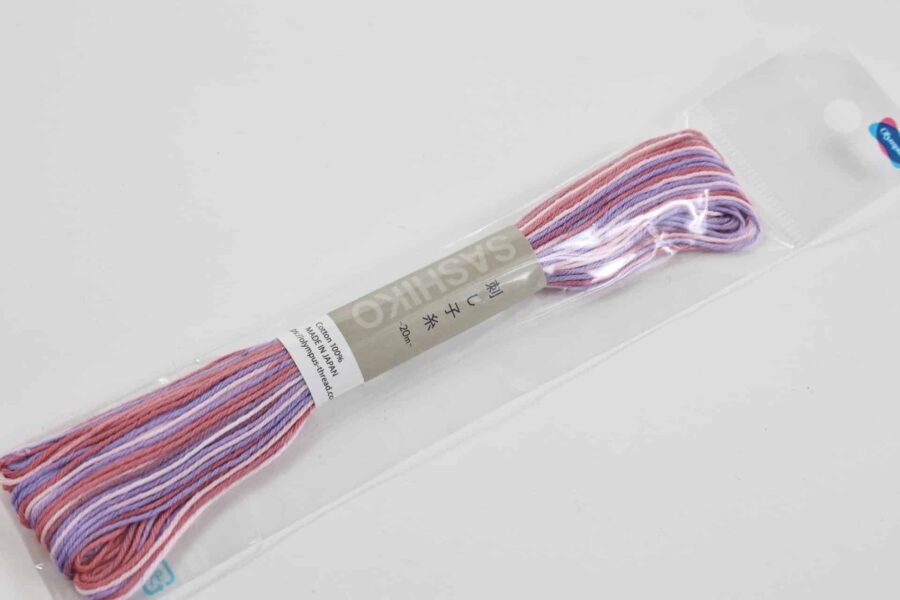
Japanese Sashiko embroidery thread 20m mix No.73
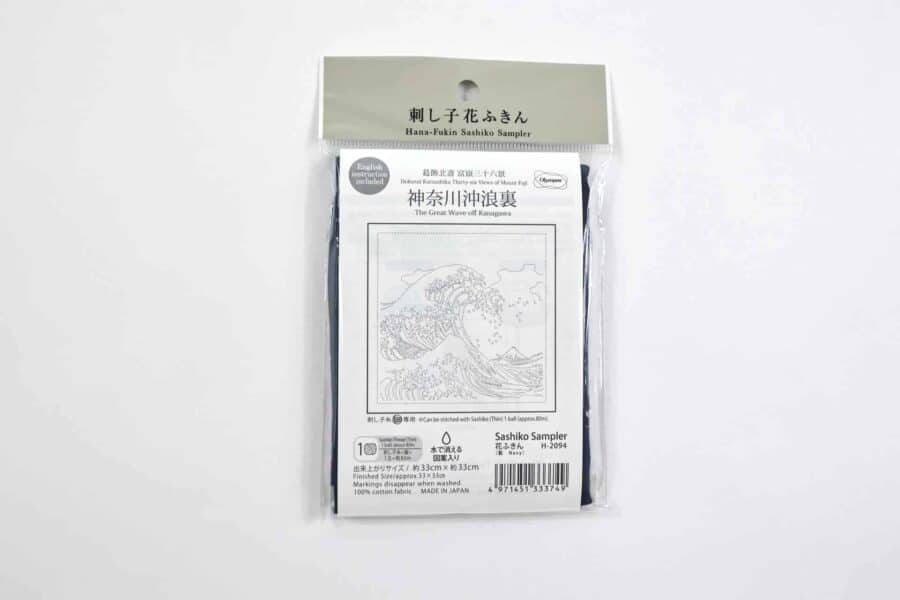
Pre-printed Sashiko fabric the great wave of Kanagawa, blue background
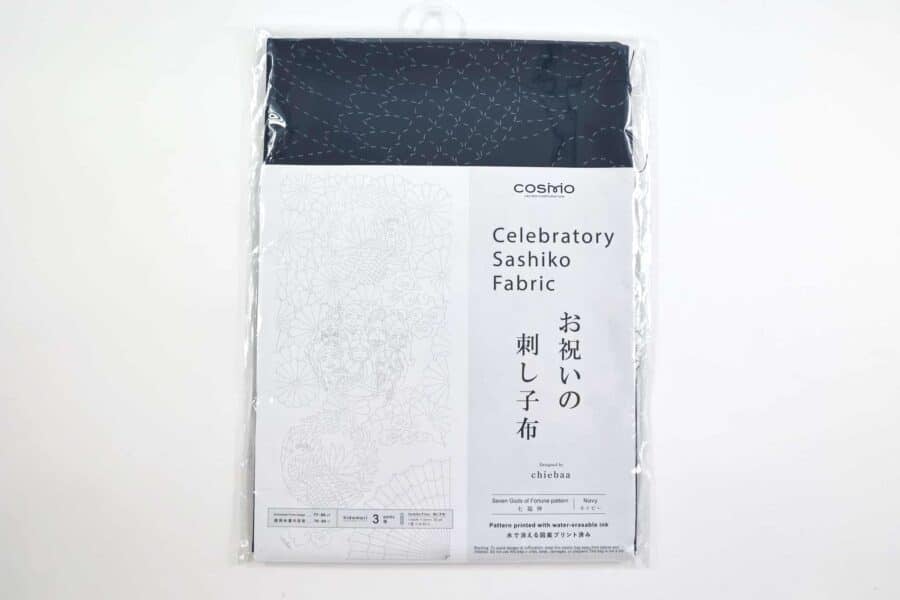
Pre-printed Sashiko panel, seven lucky gods blue background
Getting started with sashiko: first stitches and visible mending
Sashiko is one of the easiest embroideries to take up, because there is only one stitch to master. The golden rule fits in a sentence: even stitches, and a little more fabric showing on the front than thread on the back. You load two or three stitches on the needle, pull gently, then smooth the row with your thumb so the fabric does not pucker. The secret is to keep the thread relaxed behind the work.
Tradition avoids knots. Rather than knotting, you tuck the thread under the stitches already worked at the start and finish, which gives a clean, sturdy back. At the line crossings, you let the needle pass without tightening, to preserve the fabric’s suppleness. These small gestures are picked up in an afternoon.
For a first project, keep it simple: a coaster, a flat pouch, a fabric bookmark, or a framed sampler. A square of cotton, a contrasting thread, a moyōzashi line pattern, and you already have something satisfying. Back when I ordered these supplies from France, I picked them from a catalog; being able to handle them today before putting them on the shelves has made me rethink a few judgments, and sashiko thread is one of those materials you understand better between your fingers.
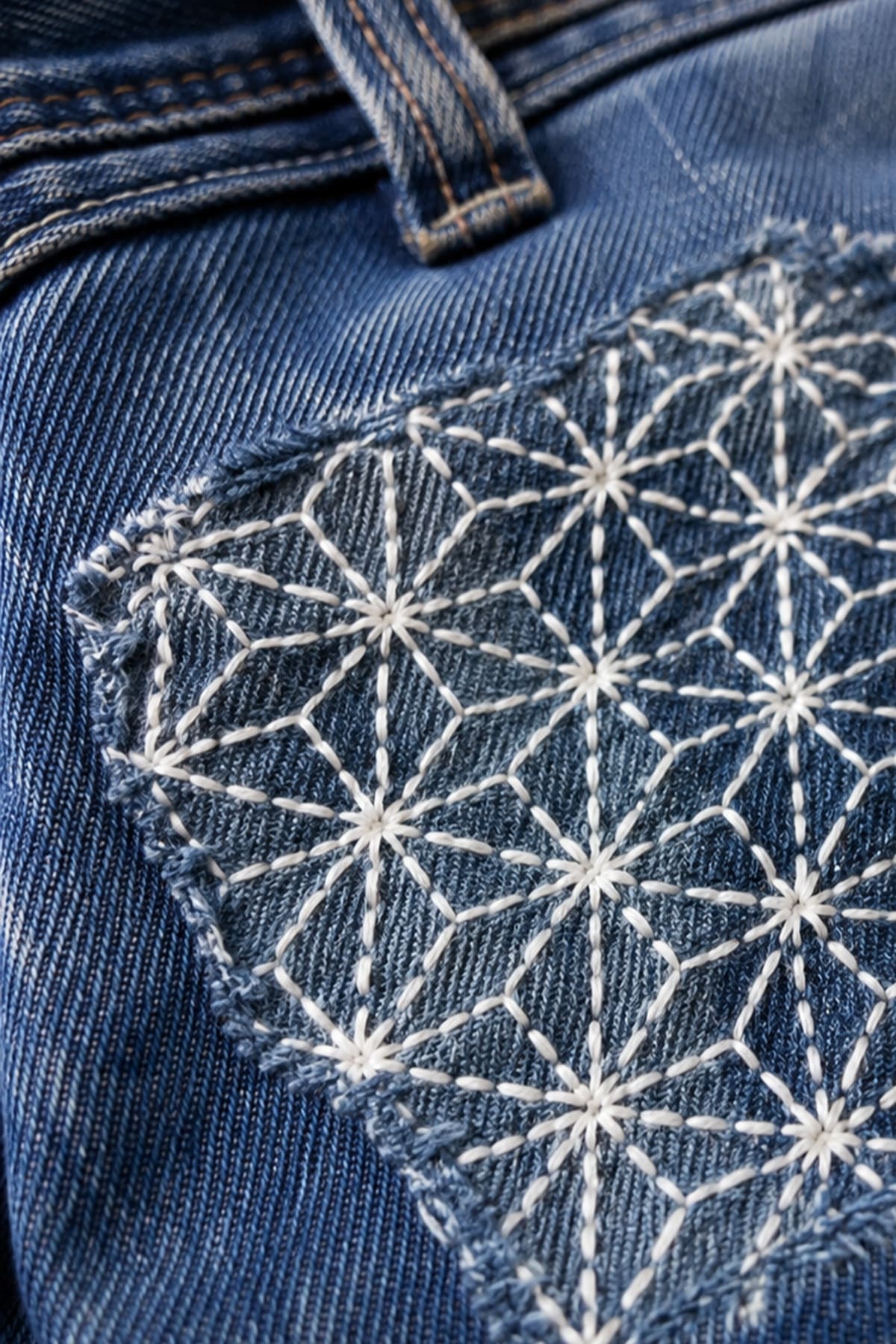
Sashiko is living a second life today through visible mending. The principle extends its original spirit directly: instead of hiding a tear or a worn spot, you repair it with sashiko embroidery you own up to, often over a small piece of fabric slipped behind the hole. A torn jean knee, a worn shirt elbow, a tired pocket become the occasion for a pattern. The repair shows, and that is the whole point.
Sashiko today
Sashiko is enjoying its strongest surge of interest in over a century. Since the mid-2010s, workshops, books, online classes, and sewing communities on social media have introduced it to hundreds of thousands of people outside Japan. What was a fading rural skill has become a global creative hobby.
This enthusiasm is not just an aesthetic fashion. It meets a very current concern: sustainability. Extending a garment’s life by a few years clearly reduces its environmental footprint, and sashiko offers a beautiful, accessible way to do it. Japanese fashion brands have built entire collections around boro-inspired patchwork and sashiko embroidery, and the technique shows up regularly in designer fashion as well as in high-end workwear.
There is something fitting in this return. Sashiko was born of the need to waste nothing, in a rural Japan that had no choice. It comes back today by choice, in a world rediscovering the value of repair. The shop shows me this every week: skeins of sashiko thread and indigo fabrics leave as much with embroidery enthusiasts as with people who simply came to save a pair of jeans they love. I would love to devote an article to aizome, traditional indigo dyeing, and to the Tokushima workshops that keep it alive, so closely are indigo and sashiko bound together.
Conclusion
Sashiko tells a story that few crafts carry so plainly: that of a people who turned a constraint, the lack of cloth and color, into a beauty that crosses the centuries. From the humblest running stitch come motifs that now belong in museums, and that are still sewn, in the evening, on the corner of a table, with a needle and white thread.
What I love about sashiko is that it asks for almost nothing to begin and rewards you right away. No machine, no complicated pattern, just a repeated gesture that calms and a result you are proud to show. And if the first row is not perfect, it does not matter: sashiko has always celebrated the hand that repairs, not perfection.
If the urge takes you, pick a thread, a square of indigo fabric, and a simple motif from our sashiko supplies and fabrics collection, and start your first stitch. You’ll let me know what you make of it!