


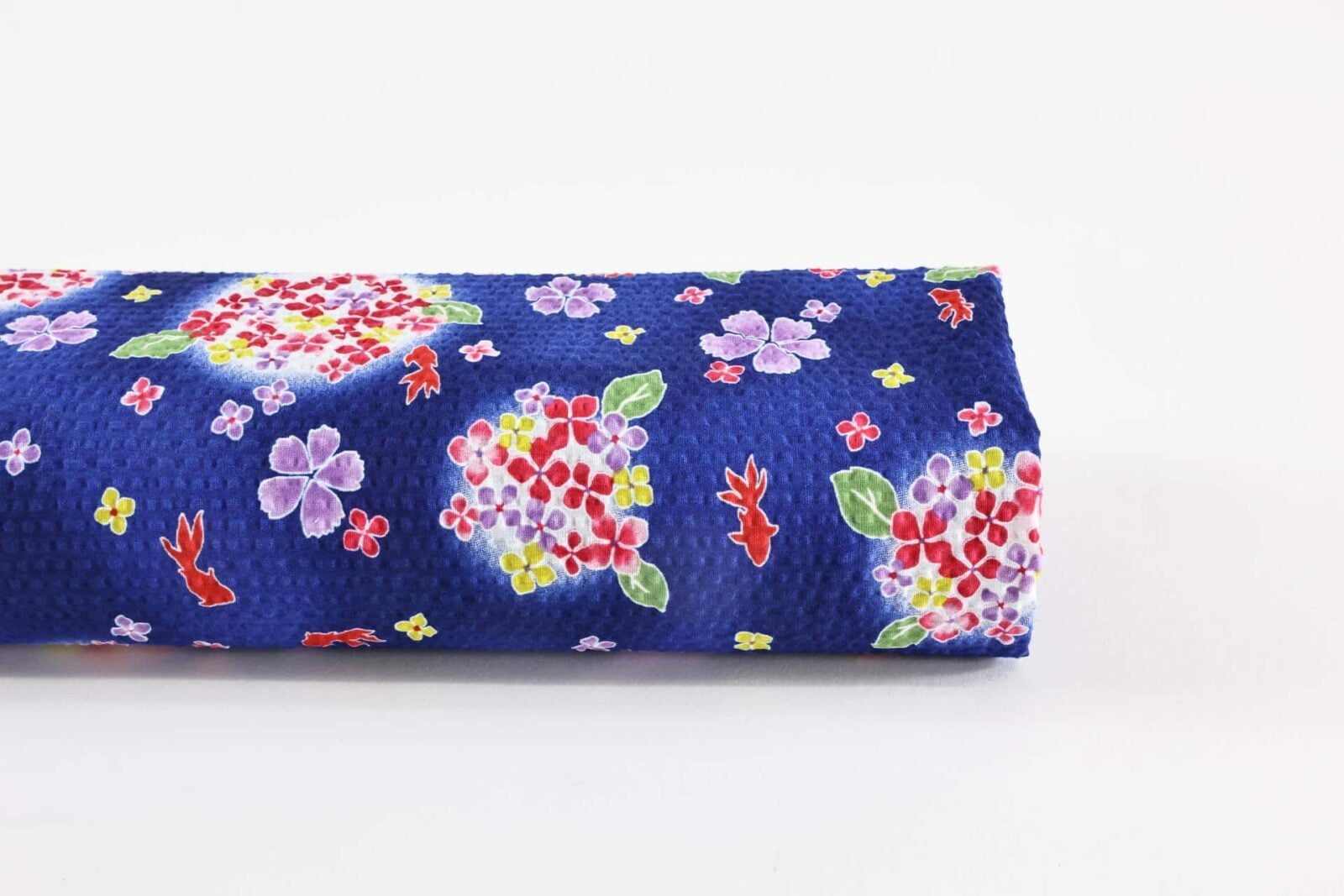
Seersucker is instantly recognizable by its puckered, three-dimensional surface. The texture isn’t a print, it’s woven in, so the cloth ripples into tiny ridges that hold it a breath away from your skin. That’s the whole trick: air keeps circulating even on a still, humid day, so seersucker stays cool where a smooth cotton would cling. Ours is 100% cotton with that signature crinkle and a soft, lived-in hand. Japan has long loved cool summer cloth, and its traditional puckered weave, shijira-ori from Tokushima, was worn for summer kimono for generations. Our cotton seersucker isn’t that artisan weave, but it shares the same idea: texture that keeps you comfortable through the hottest months.
5 products found
-
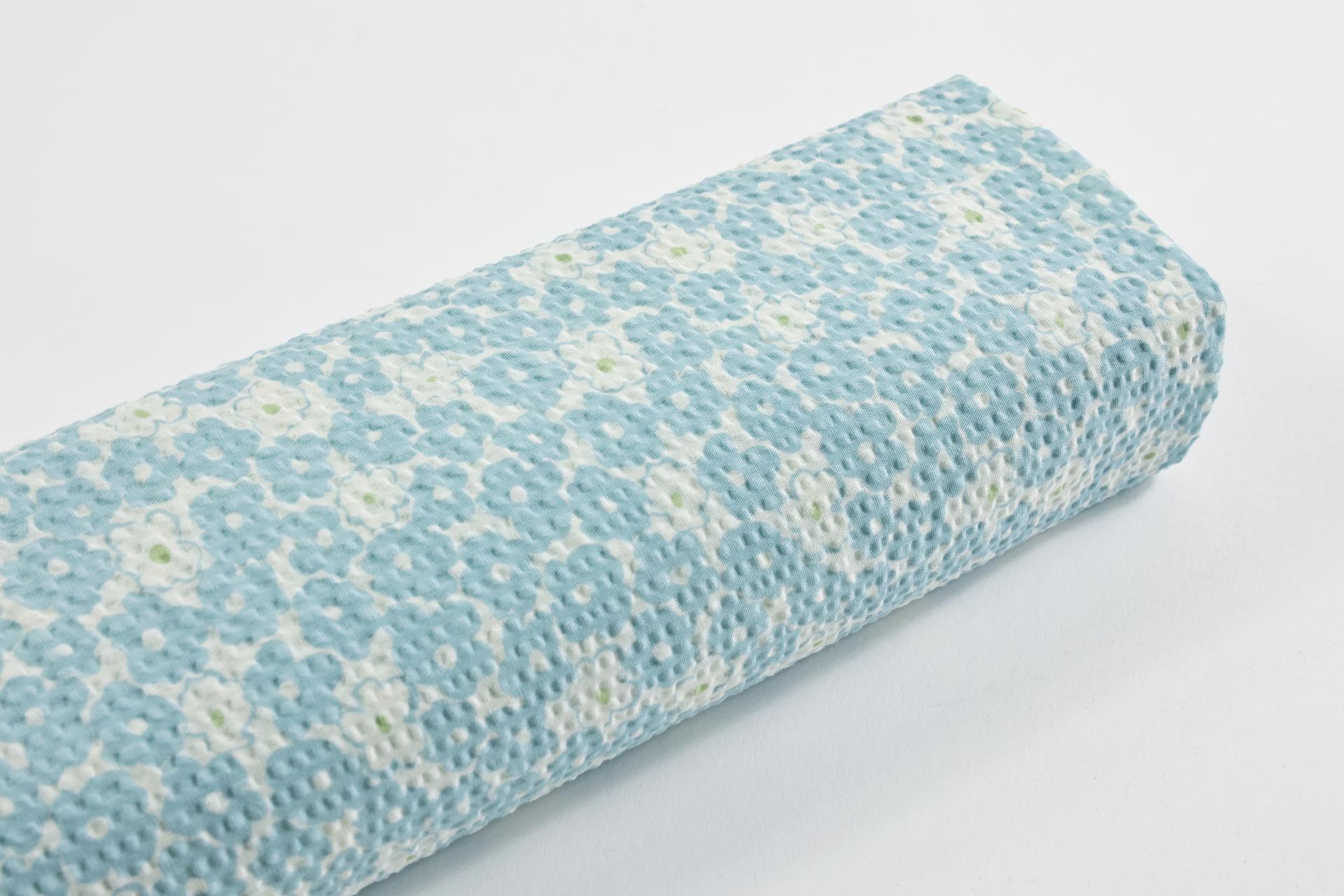
Japanese light blue floral seersucker fabric
Kobayashi Japanese seersucker fabric printed with small light blue and white flowers
-
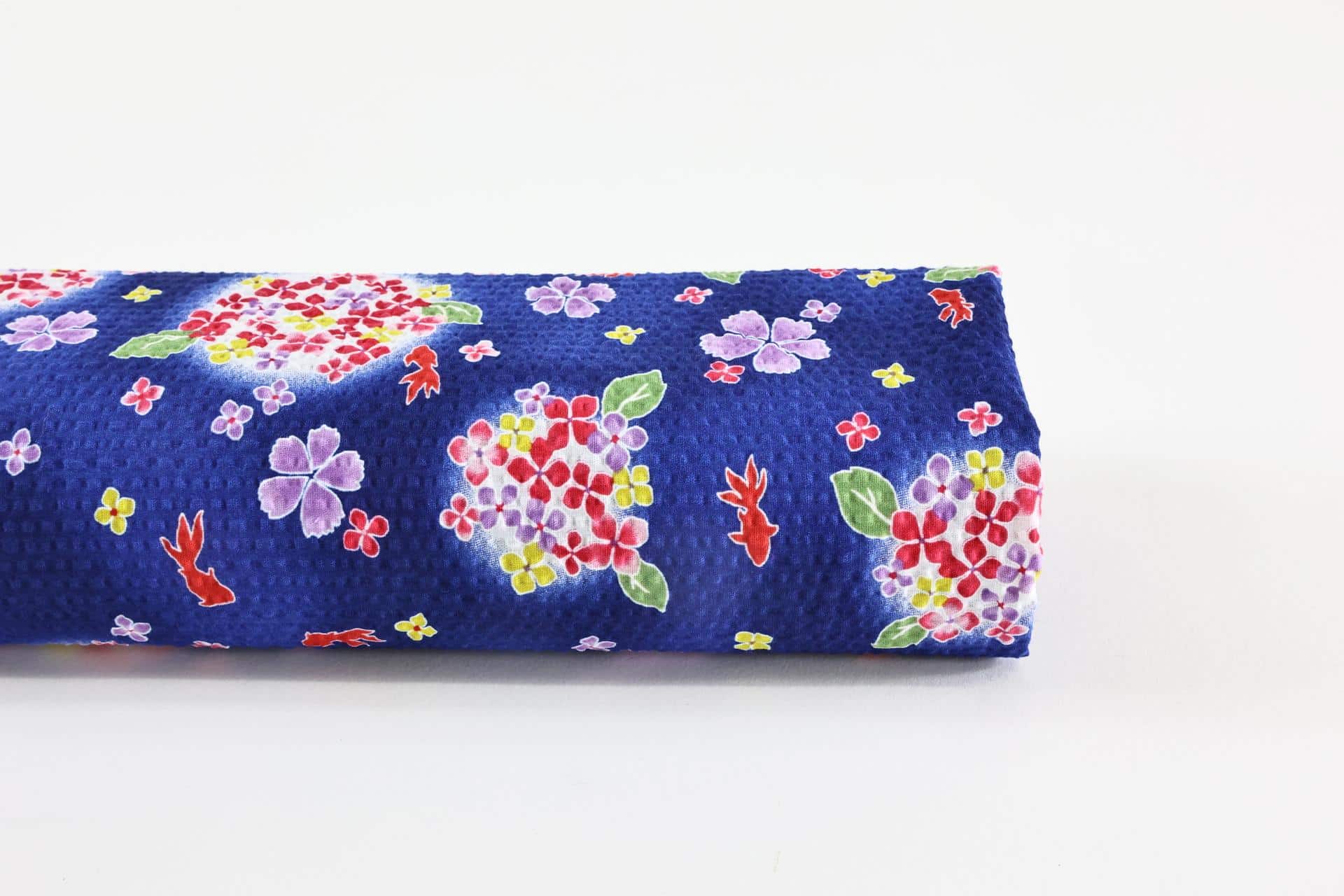
Japanese seersucker goldfish fabric navy blue background
Lightweight Japanese Seersucker fabric printed with small Kingyo goldfish and hydrangeas.
-
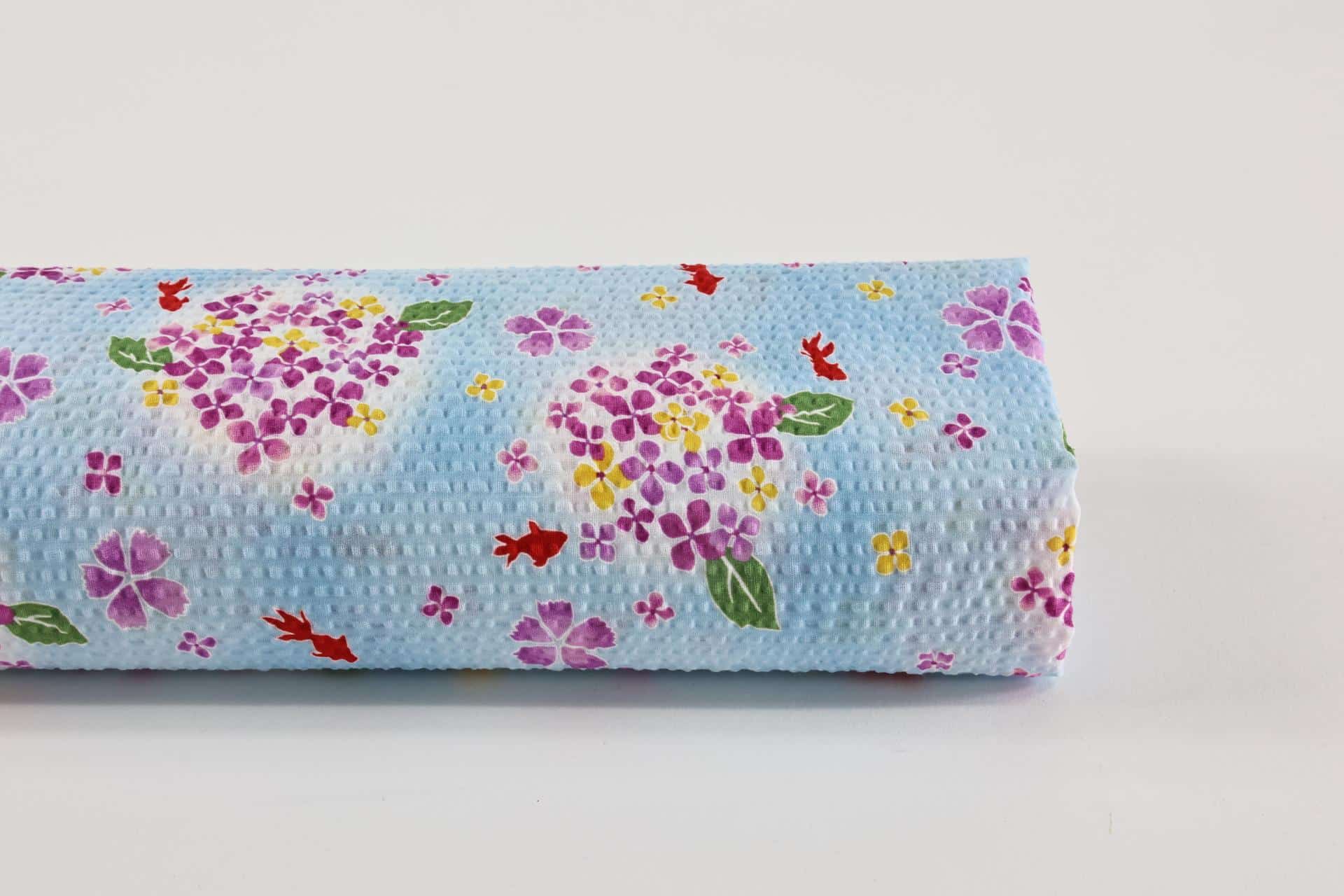
Japanese seersucker goldfish fabric light blue background
Lightweight Japanese Seersucker fabric printed with small Kingyo goldfish and hydrangeas.
-
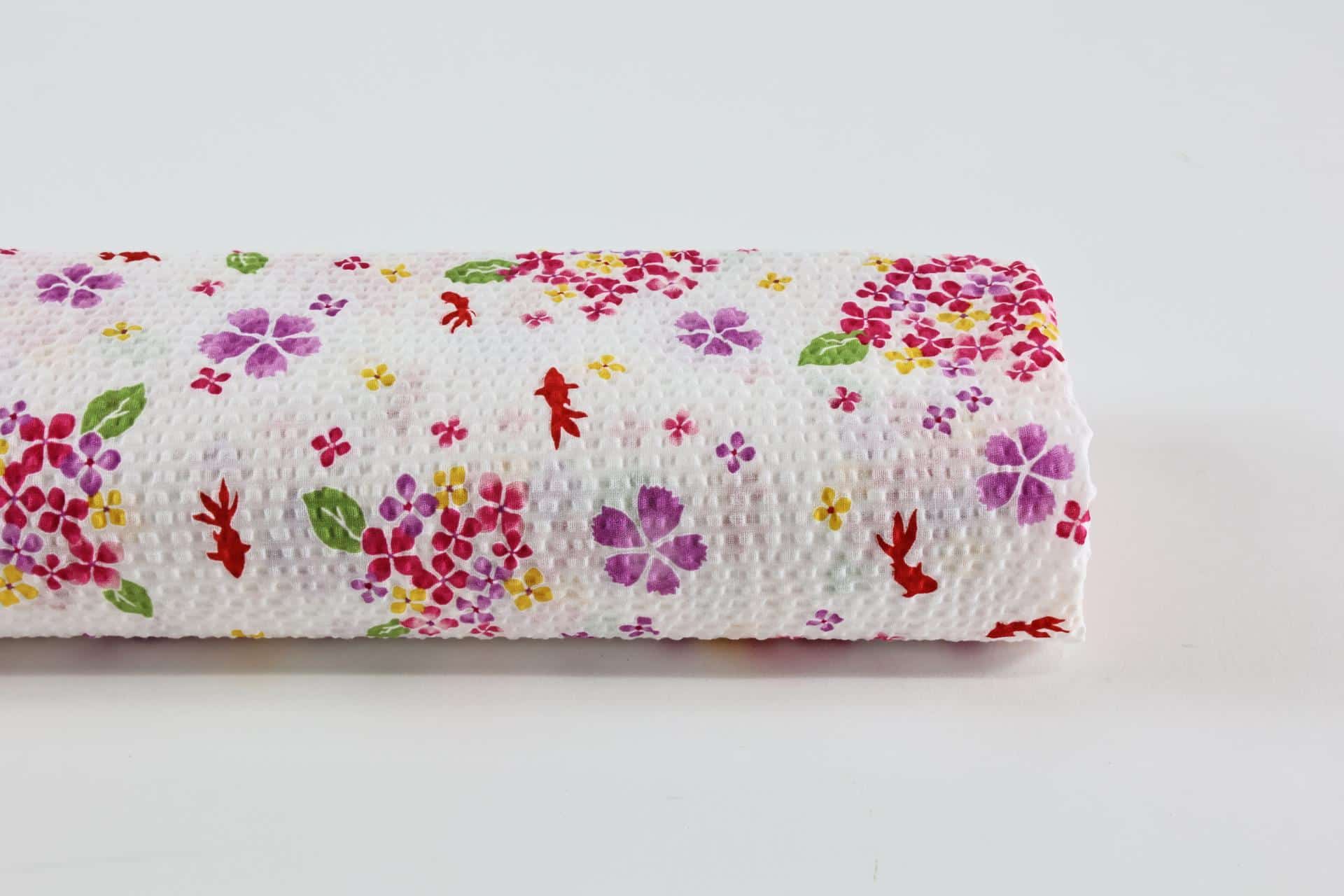
Japanese seersucker goldfish fabric white background
Lightweight Japanese Seersucker fabric printed with small Kingyo goldfish and hydrangeas.
-
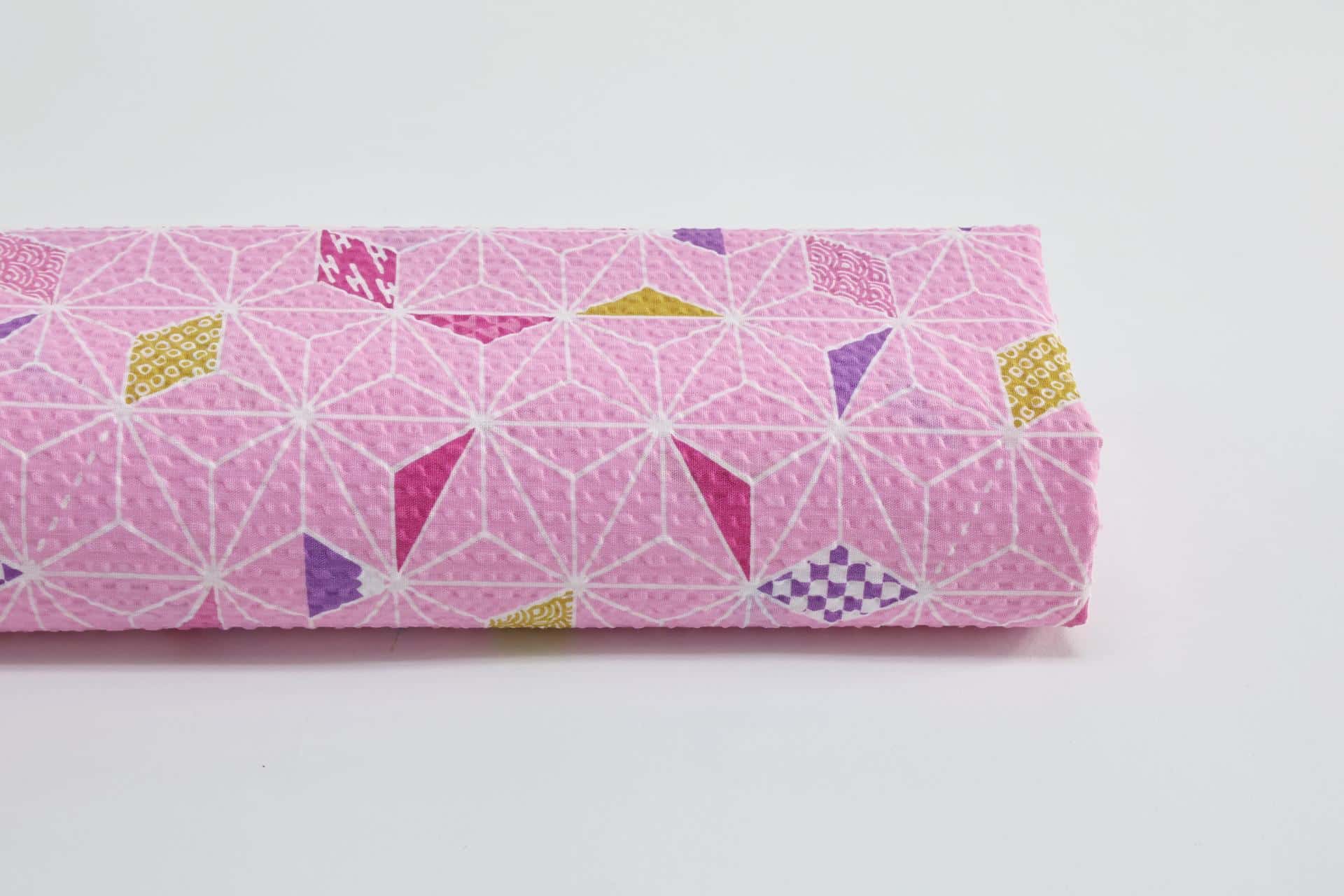
Japanese Asanoha seersucker fabric pink background
Japanese seersucker fabric with a crinkled texture and traditional Asanoha print
What is seersucker, and why it's made for summer
What to sew with seersucker, by the yard
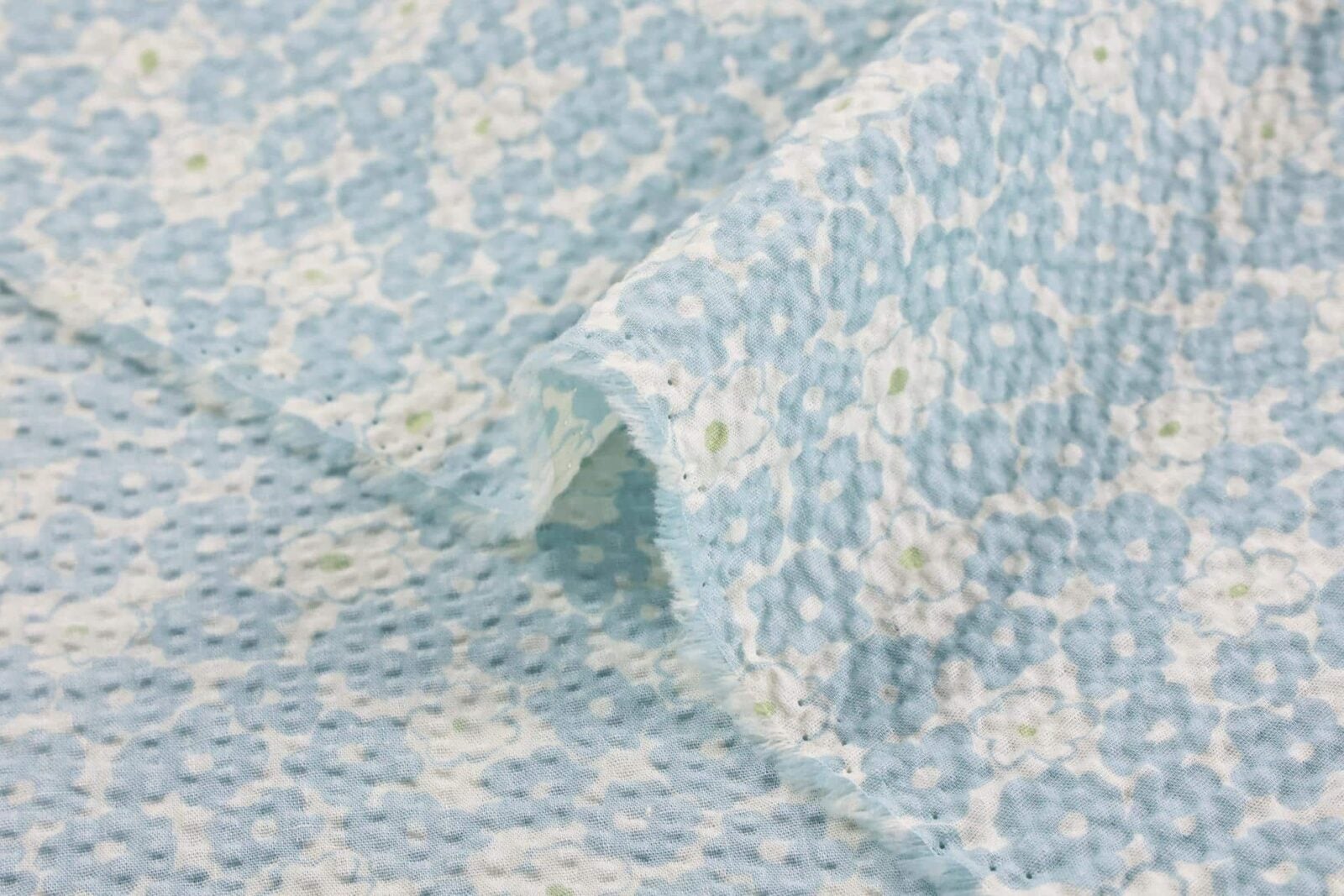
Seersucker is a dressmaker’s summer staple. This 100% cotton seersucker is lightweight, breathable and, best of all, it never needs ironing, because the wrinkle is the design. Use it for crisp button-down shirts and blouses, easy summer dresses and skirts, lightweight blazers and the classic seersucker suit, pyjamas and robes, and durable, comfortable kids’ clothes. It also pairs beautifully with our other warm-weather Japanese cottons: try it alongside our Cotton Lawn for a smoother drape or Double Gauze for extra softness next to the skin.
From the yukata to the jinbei, and how to care for it
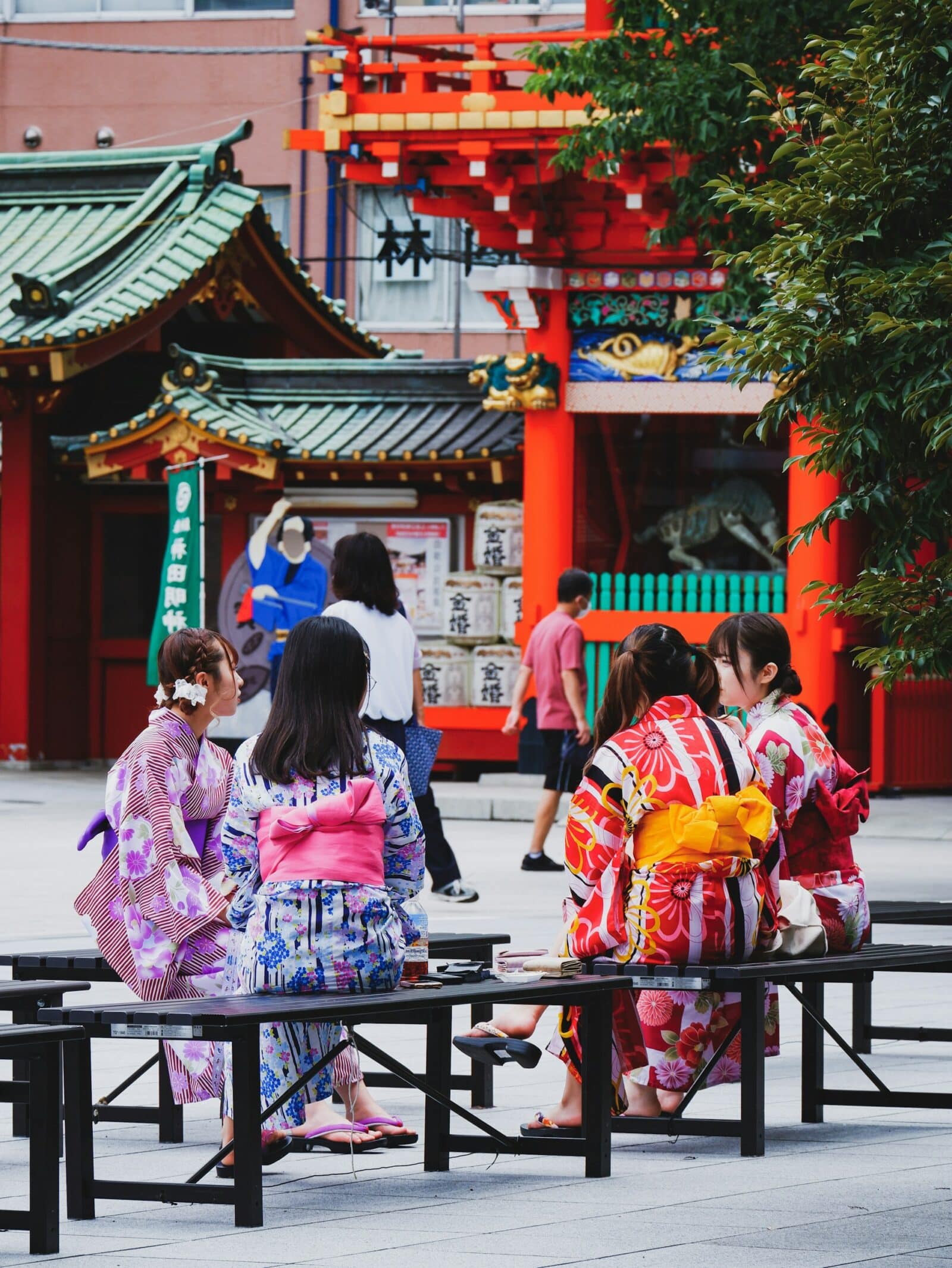
Long before it became a Western warm-weather favorite, this puckered cotton was a summer-kimono fabric in Japan. Its airy weave makes it a natural choice for the yukata, the light cotton kimono worn at summer festivals, and for the jinbei, the relaxed two-piece set worn around the house. If you’re sewing your own summer kimono, start with our complete guide to the yukata, it walks through fabric choice, history and how to wear one. Caring for seersucker is easy: machine wash cold on a gentle cycle, tumble dry low, and skip the iron entirely, pressing it flat would crush the very texture that keeps you cool. Every length is cut fresh from the bolt in half-meter increments at our small Kyoto studio and shipped worldwide with duties included at checkout, no surprise fees on delivery.
Find out more about Japanese seersucker fabrics
Here are some answers to questions you may have about this product category and our shop.
What is Japanese seersucker fabric?
Seersucker is a puckered cotton: the crinkled, three-dimensional texture is woven into the cloth (not printed), so it sits slightly off the skin and lets air flow, which is why it feels so cool in summer. Ours is 100% cotton seersucker, ideal for warm-weather sewing.
Is this the same as shijira-ori (Awa shijira)?
Not exactly. Shijira-ori is a traditional artisan weave from Tokushima, historically used for summer kimono. Our fabric is cotton seersucker, it shares the same cool, puckered principle and suits the same summer projects, but it isn’t the artisan shijira cloth.
What can I make with seersucker fabric?
It’s ideal for summer clothing: shirts and blouses, dresses and skirts, lightweight blazers and the classic seersucker suit, pyjamas and robes, kids’ clothes, and traditional pieces like the yukata or jinbei.
Does seersucker need ironing, and will it shrink?
No ironing: the wrinkle is the whole point, and pressing it flat would ruin the texture. As it’s natural cotton, we recommend a cold pre-wash before sewing to settle any shrinkage, then machine wash cold and tumble dry low.
How is the fabric sold and how wide is it?
It’s about 110 cm (around 43 in) wide and cut to order in half-meter increments from a continuous length, so you can order exactly the amount your project needs.
Is Japanese seersucker good for a yukata?
Yes, its breathable, off-the-skin weave is one of the classic summer-kimono fabrics in Japan. See our yukata guide for fabric quantities and sewing tips.
